CERTIFIED INDOOR
AIR, INC.
For more information about indoor air quality and assessment, visit our website or contact us by phone, text, or email for a free clean air consultation:
CERTIFIED INDOOR AIR, INC.
OF THE TRIANGLE
Call or Text: (919) 525-6464
Raleigh, NC 27606
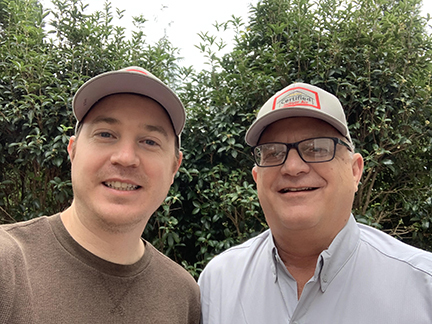
“A client of mine, who I’ll call Judy,” notes Bill Dolch, an expert in air quality and environmental assessment, “is a pretty typical example of many people who experience mold sickness. Her story—which involves a circuitous path to healing—is certainly one I see frequently.”
Mr. Dolch is owner and founder of Certified Indoor Air, Inc. of the Triangle, a company providing comprehensive mold testing and air quality assessments in the Greater Triangle area.
“Judy’s experience—a common one—began with symptoms that were hard to explain,” says Mr. Dolch.” She had respiratory issues, extreme sensitivity to heat, sleep issues, and headaches. It turns out that she had been living in a water-damaged home for some time, but the symptoms had come on gradually and her partner had none.
“That’s not unusual,” he notes. “One of the tricky aspects of our work is that not everybody reacts the same way to toxins. So, while some in the household may be very ill, others may be fine.
Symptoms of CIRS
Chronic Inflammatory Response Syndrome (CIRS) is a condition with a wide range of symptoms that are triggered exposure to biotoxins—typically mold. The ongoing inflammation can affect virtually any organ system of the body and, if left untreated, becomes debilitating. Symptoms of CIRS are among the most useful signals that a home may be contaminated. They include:
- Fatigue
- Pain, tingling, numbness, tremors, dizziness
- Problems with memory, focus, concentration
- Mood swings, loss of interest in activities, depression, anxiety
- Headaches, light sensitivity, blurred vision
- Sinus symptoms, metallic taste in the mouth
- Cough, shortness of breath, asthma
- Abdominal pain, diarrhea
- Frequent urination, excessive thirst, temperature regulation problems, appetite swings
- Weakness, joint and muscle aches, morning stiffness, muscle cramps
- Skin sensitivity, sweats, static electricity/shocks
For more information, go to www.survivingmold.com.
“As a consequence, a very normal response to common mold illness symptoms is to seek a medical explanation. Unless there’s been a recent major event—such as a flood—you don’t necessarily assume that your home is the source. If the symptoms are extreme, your doctor may quickly assess mold problems. More often, you might go through a lot of medical tests.
A Professional Journey
Bill Dolch did not set out to become an industry leader in mold assessment and environmental consulting, but life events, coupled with a solid foundation of experience in home construction and management, steered him along this path. “You could say my career began when, coming out of school, I worked as a carpenter’s helper on a fire restoration team in Chicago,” he says. “That experience helped me understand how to frame and build a house—and how to rebuild it. That led in turn, in a natural way, to working for a time in real estate management.
“However, it was a personal event that triggered a major change in my career path,” he explains. “My oldest son, Daniel, who was about 12 at the time, was clearly not well; he was way too lethargic for a youngster his age. We took him to all kinds of doctors without getting good answers. But, finally, we found a functional medicine doctor who tested him thoroughly for allergies and sensitives, and when she tested him for mold, he passed out. It turned out he had mycotoxin poisoning. So, my first experience in this business was dealing with mold in my own home. This was a long time ago, so I learned a lot of things, kind of the hard way.”
It was some years later, however, before Bill moved into this work full time. “A good friend had started a mold testing business in Florida and introduced me to the process—and to the idea that there’s something known as a ‘sick building syndrome.’ It’s very real. Buildings can harbor and spread mold, bacteria, and toxic chemicals in a variety of ways. I saw it in action in my friend’s business.
“Given my background in building restoration and the very personal experience with my son’s mold illness,” he says, “creating Certified Indoor Air 30 years ago was probably the most natural evolution of my professional path. It’s certainly been a rewarding one.” As for Bill’s son, Daniel, the journey has also been a positive one. “We were able to clear our house of mold,” Bill says, “and the functional medicine doctor we worked with also introduced us to the idea of self-detoxification. He’s doing well, but even to this day, he still is in a detox mode to maintain his health.”
“That’s what Judy did,” says Mr. Dolch. “She did a sleep study and testing with her cardiologist among other things. But the ‘test’ that steered her on a healing path is actually one we recommend to people dealing with elusive symptoms. I call it the ‘vacation test.’ Judy had a 10-day business trip during which she felt fine, and when she came home she suddenly felt terrible. That was when we met and, through testing, were able to identify the mold issues that had made her so sick.”
Healing a “Sick Home”
For people suffering from mold illness, notes Mr. Dolch, the first step on the healing path is to diagnose the home. “Mold isn’t a bad thing,” he says with a smile. “Without it, we wouldn’t have beer, blue cheese, or penicillin. However, when mold starts attacking the inside of your house, it’s a very bad thing. Half the buildings in the US have sustained water damage and, in North Carolina, that’s compounded because we experience a daily average of 70 percent humidity year-round. This is the perfect environment for mold to prosper.
“The challenge is that while mold thrives in water-damaged buildings, not all the growth is visible,” he explains. “And one lesson I’ve learned in my thirty-plus years in this business is that most people are unaware of the toxins they’re exposed to in their own homes.
“Most often, people become aware of a mold problem when it makes them sick,” he says. “A very serious condition—CIRS (see box)—is caused by mold; but indoor toxins can also produce less obvious health problems. For that reason, testing—‘diagnosing’—your house is important. It’s not enough to treat the illness, you must also eliminate the source of the problem. Just as medical tests can pinpoint the problem in your body, a thorough assessment can identify which toxins are present, where they are, and how they’re spread through the house.”
Comprehensive Testing
“Our clean air protocol is comprehensive,” he explains. “We inspect your home, inside and out, looking for points of water infiltration, past and present water damage, structural abnormalities, and signs of mold. Test samples are collected throughout the home and analyzed through an accredited third-party lab.
“An important part of this process,” he adds, “is consulting with the residents of the home. We need to learn of any symptoms and health issues they’re experiencing. That information can tell us a lot about potential contamination. And mold is not necessarily the only problem contaminant; we also test for mycotoxins and endotoxins in the indoor environment. And we can test for volatile organic compounds, such as you might find from off-gassing from a new house or new furniture.”
The outcome of the assessment is a detailed report on findings, including surface and air samples as well as recommendations for remediation. “We don’t do the remediation,” explains Mr. Dolch, “but we provide all the information needed to ensure that problems can be remedied.”