The UNC Department of Physical Medicine & Rehabilitation
Program on Integrative Medicine
UNC MINDFULNESS-BASED PROGRAM FOR STRESS AND PAIN
MANAGEMENT
The UNC Mindfulness-based Program for Stress and Pain Management offers a variety of classes in meditation and mind-body awareness training that will teach you to slow down, set priorities, and stay calm, focused, and relaxed during a busy life. These practices will enhance your body’s natural adaptive healing ability and cultivate the mind’s clarity and insight.
For more information: go.unc.edu/mindfulness
Questions? Email: paulah@email.unc.edu
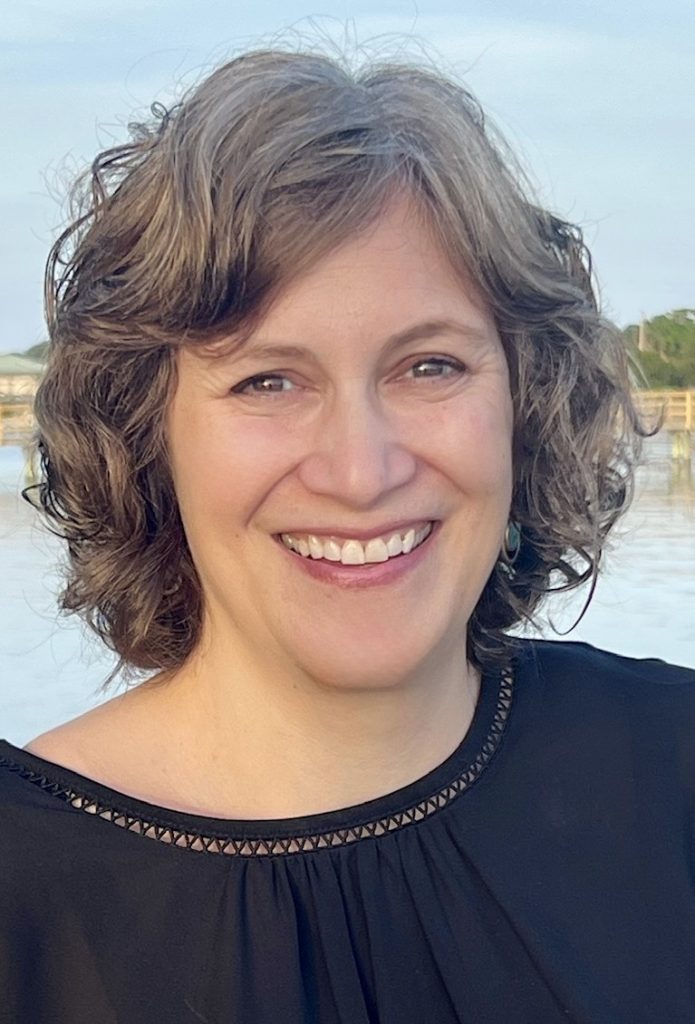
Dr. Hexdall teaches a class on mindful parenting with the UNC Program on Integrative Medicine. In the article below, she describes the scope and perspective of her class. The PIM offers a variety of classes—in person and on-line—on learning and using mindfulness techniques in our lives and to support our health. To learn more about courses offered, go to website. The next parenting class will be October 6 – November 10, 6:30 – 8:30pm. See all October courses below.
By Caroline Hexdall, PhD
Parents often need reminding that there are truly thousands of ways to be a “good” parent. For every child and parent, there are multiple paths to communication, trust, cooperation, and a loving, connected relationship. It often feels, however, that there is one right way and it just hasn’t been found yet. Even with the menu of podcasts, books, blogs, instantly at our disposal, the search can feel elusive. Yet, many of these resources are indeed precisely what we need to navigate tricky parenting waters and often buoy us to get through another day. In an effort to become a better parent, it is so important that parents not lose sight of the talents, confidence, and trust in themselves that are already available and don’t require a vast or deep search.
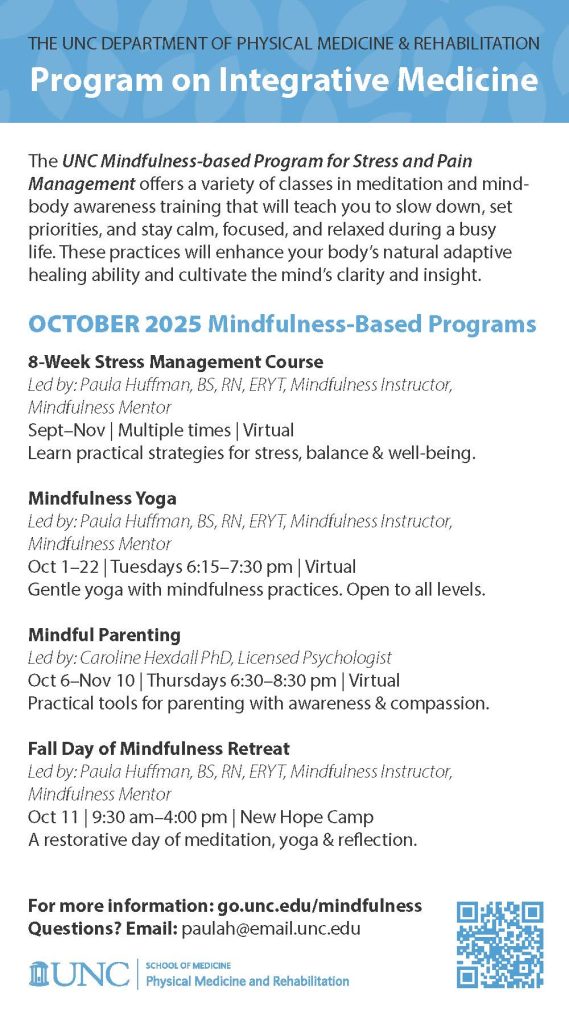
Mindful parenting is about cultivating an attentiveness to something other than the scripts, the research, and the strategies. It is not about negating or dismissing those important resources. Instead, it is about becoming aware of what else is present, serving as a supportive ground. When we truly pause, pay attention, and simply become aware of the world within us and the outer world, noticing the merest comment, a mindful state emerges. From this place of mindfulness, we see so much more of what is happening. It dawns on us that our child is actually exhausted, and we suddenly have the wherewithal to make a choice to carry our child because that is what is needed. In another moment, we may see clearly that our child is resisting doing something hard and we then have the presence of mind to encourage, scaffold, and motivate, but not do the hard thing for them. Or, we recognize that our mild disagreement with a co-worker earlier in the day is replaying in our minds as we hear our child whine. There is recognition that those are separate people, separate times, separate issues and the whine can be addressed with redirection, modeling, and care.
What is the Class Like?
After a long break, I am teaching the mindful parenting class again in a hybrid fashion. Most sessions will be via zoom, with in-person classes at the beginning and end. The class begins with participants gaining a core understanding of mindfulness through practices such as sitting meditation, mindful eating, and breath awareness. It is important for participants to have several opportunities to feel the effect of being mindful, at a physical level. For individuals new to mindfulness, it can feel uncomfortable to pause for a long period of time. There may be doubt that they are doing it “right” or that anything “good” is happening. It is important to have practice in becoming aware of all thoughts and sensations to recognize that one can be mindful of any state, condition, feeling, or thought, with no judgment. Once an individual has had some experiences of allowing and accepting the neutral or pleasant experiences, it gets easier to have full allowing and accepting of more unpleasant experiences, which is inevitable in life, and certainly commonplace in parenting.
After participants begin practicing mindfulness on a semi-regular basis, they often are better able to look back on how they were parented, and at what experiences they had during their childhood that were particularly impactful. It is important to go through this process simply to make sense of the experience. In the class, this is done with tremendous compassion, understanding, curiosity, support, and humor. Certainly, childhoods and attachment are not fully made sense of in class, but often merely scratching the surface can bring awareness to topics that need to be explored more comprehensively with a trusted professional or through journaling, or other form self-expression. When we never acknowledge the difficult experiences, they very likely still affect us, especially when our children grow to the age we were when we experienced the most significant struggles.
Following this segment of the class, we delve more deeply into being mindful during relatively difficult moments of parenting. An important aspect of mindful parenting is co-regulation. Essentially, this is when a parent recognizes their own emotion and state, and modulates it in such a way to bring about the same or similar state within their child. The parent focuses on their own regulation initially, followed by supportive listening, validation, and modeling to help their child reach a state that is more regulated.
In addition to these components of the class, participants learn about self-compassion, effective boundary setting, and how to easily incorporate mindfulness practices with children in daily activities such as mealtime, preparing for bedtime, and during transitions. Being a parent is no small feat. It is one of the most revered relationships we form and one of the most important roles that we play in our community. Past participants of this class have formed close relationships with other parents, felt validated and supported on their parenting journey, and report feeling generally more relaxed and confident as they support their children, regardless of age. For information about registration, … For information about the class itself, email Caroline at caroline@mindfuldevelopment.com.