Certified Indoor Air, Inc.
For more information about indoor air quality and assessment, visit our website or contact us by phone, text, or email for a free clean air consultation:
CERTIFIED INDOOR AIR, INC.
OF THE TRIANGLE
Call or Text: (919) 525-6464
Raleigh, NC 27606
It can be frustrating, even frightening. You have symptoms that can’t be explained but that are having a profound impact on your life. Pain, fatigue, brain fog, respiratory and digestive issues are among the symptoms of CIRS (Chronic Inflammatory Response Syndrome), an inflammatory condition that can affect virtually any organ system of the body and, if left untreated, becomes debilitating.
And although older people are more susceptible to immune system disorders, it may well be that it is not your age that is the source of your illness, but the age of your house. Because CIRS is a condition triggered by exposure to biotoxins—typically mold; and older houses can be an unsuspected source of mold contamination.
“Any house can harbor dangerous toxins,” says Bill Dolch, owner of Certified Indoor Air, Inc., of the Triangle, a company that provides comprehensive mold testing and air quality inspections in the Greater Triangle area. “In fact, the Environmental Protection Agency estimates that as many as 50 percent of buildings have water damage significant enough to produce health problems—some very serious—from mold and bacteria growth in water-damaged buildings. But older houses pose special challenges that may contribute to mold growth.
“Although routine testing for household toxins—even for older houses—isn’t necessary,” says Mr. Dolch, “there are a several instances when it makes sense to get an inspection. A water damage event—flooding or burst pipes—should put you on the alert. But most important: listen to your body. Symptoms—especially unexplained symptoms—that persist and don’t respond to treatment and can’t be tracked down are the red flags (see box). In such cases, talking with your health care provider is an important next step.”
Symptoms of CIRS
Chronic Inflammatory Response Syndrome (CIRS) is a condition with a wide range of symptoms which are triggered exposure to biotoxins—typically mold. Symptoms of CIRS are among the most useful signals that a home may be contaminated. So, if you or someone you live with experiences eight or more of these symptoms, get them checked out for CIRS.
- Fatigue
- Pain (increased, unusual), electrical sensation, tingling, numbness, tremors, tics, dizziness, atypical seizures
- Problems with memory, focus, concentration, finding words, confusion, disorientation
- Mood swings, loss of interest in activities, depression, anxiety
- Headaches, light sensitivity, blurred vision, red or teary eyes
- Sinus symptoms, metallic taste in the mouth
- Cough, shortness of breath, asthma
- Abdominal pain, diarrhea
- Frequent urination, excessive thirst, temperature regulation problems, appetite swings
- Weakness, joint aches, morning stiffness, muscle cramps, muscle aches
- Skin sensitivity, sweats, static electricity/shocks
For more information, go to www.survivingmold.com
Hidden Vulnerabilities in Older Homes
“A water damage event—such as a flood or burst pipe—is the most likely source of environmental contamination,” notes Mr. Dolch, “but in older houses, other factors play a role. For example, a house built in 1950 might have had such an event in 1955. It was likely repaired, but repairs may have been inadequate, and the family that bought the house in 2025 may unknowingly have inherited a slow-growing mold colony.
Types of Mold
A number of molds are considered toxic to human beings,” says Mr. Dolch. “It’s impossible to identify most of these by appearance alone, which is why proper inspection, testing, and identification is so important.”
Two of the most dangerous molds are Stachybotrys—also referred to as “black mold”—and Chaetomium. Other toxin producing molds include Fusarium and Penicillium.
Two of the most common molds found in this region, says Mr. Dolch, are Aspergillus and Cladosporium. “When I find these, I’m not alarmed, but when I found them in high quantities, in high density, then we do have problems.
“The most problematic molds are the slow-growing mycotoxin-producing molds such as Stachybotrys. Too often, a major water event will occur and will be cleaned up. But small remaining or dried up mold colonies still have microbial fragments that will grow back, unexpectedly causing problems long after the water damage originally occurred.”
“In fact, a common source of contamination is not the event itself, but that the event wasn’t reacted to correctly. One example that comes to mind is an instance where a shower stall overflowed. Repairs were made, but some of the overflow had gone down into the ceiling cavity and was never cleaned up. The result, some time later, was a mold colony.
“Some older houses,” he adds, “contain toxic materials, such as asbestos, that are built into walls, and are only revealed when a repair or remodeling exposes them. Also, it’s important to remember that building materials deteriorate; nothing lasts forever. Older pipes can spring leaks, vapor barriers in your crawl space can deteriorate, and slow-growing mold colonies can eventually become environmental hazards.”
Detailed Detective Work
“The bottom line,” says Mr. Dolch, “is that most people are unaware of the toxins they’re exposed to in their own homes, and most often become aware of a mold problem only when it makes them sick.
“Pollutants are everywhere,” he adds; “they’re a normal part of our everyday outdoor environment. And when we open a door or window they come into our homes; that’s also normal. And for most people, that’s never a problem. But with water damage, ‘normal’ pollutants—molds and other toxins—can grow out of hand quickly.
“And contaminants can be hard to identify because they’re often hidden,” he notes. “So, the source of a problem is often elusive and, with an older house where the history is unknown, it can be especially challenging to identify the cause of indoor pollution.
“Even if you can’t see it, that doesn’t mean you don’t have it. Mold is likely to be found—and to thrive—behind walls, in basements and crawlspaces, or ventilation ducts. The toxins produced by molds and other microbes are spread through the home ventilation system, posing an invisible but serious health hazard.
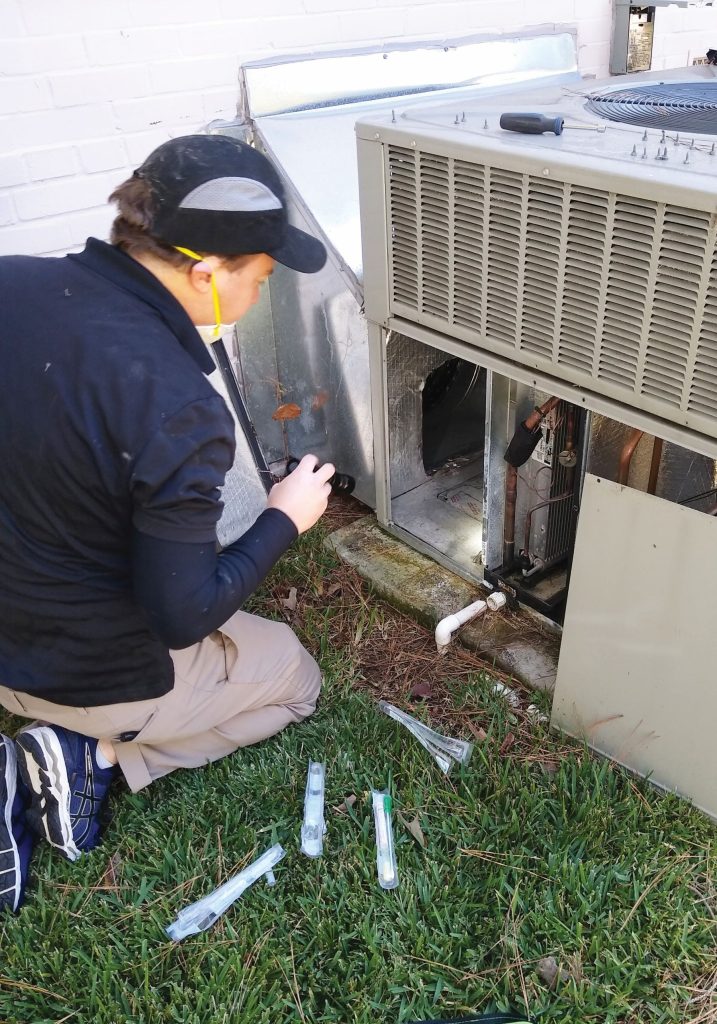
“What we do at Certified Indoor Air,” says Mr. Dolch, “is detailed detective work. Every evaluation is comprehensive—inside and out. Although 90 percent of our work is mold-related, we also test for wide variety of toxins, including organic compounds and chemicals that can come from cleaning supplies or off-gassing from different kinds of building materials or furniture. In addition to mold, many people are sensitive to chemical odors or may react to bacteria, which harbor in the dust inside the home and circulate through the HVAC system.
“So, finding all contaminants is our first priority. And identifying the specific irritants is also critically important. Different toxins will produce similar symptoms, but treatment will likely be different for different sensitivities.
“So, we have to listen closely to our clients, to learn about symptoms and health issues they’re experiencing. That information tells us a lot about the potential contamination we should be testing for.”
A Guide to Remediation
“The outcome of the assessment,” says Mr. Dolch, “is a detailed phone call reviewing all findings and recommendations—from normal building maintenance to remediation. Our goal is to provide you with precise information about the contaminants in your home. This is both information you can take to your health care provider to help in treating your illness, and information that will allow you to correct the problems in your home. We don’t do the remediation,” he explains, “but we provide all the information needed to ensure that problems can be remedied.”