Southern Dermatology & Skin Cancer Center
For more information about skin conditions and their treatment, contact:
SOUTHERN DERMATOLOGY and SKIN CANCER CENTER
An Affiliate of Anne Arundel Dermatology
Gregory J. Wilmoth, MD
Eric D. Challgren, MD
Margaret B. Boyse, MD
Laura D. Briley, MD
Tracey Cloninger, PA-C
Stephanie S. Pascale, MSN, FNP-C
Madelyn Pence PA-C
Cheryl Jones PA-C
Shelby Hayslip PA-C
4201 Lake Boone Trail, Suite 200
Raleigh, NC 27607
Telephone: (919) 782-2152
THE SKIN RENEWAL CENTER AT SOUTHERN DERMATOLOGY
4201 Lake Boone Trail, Suite 207
Raleigh, NC 27607
Telephone: (919) 863-0073
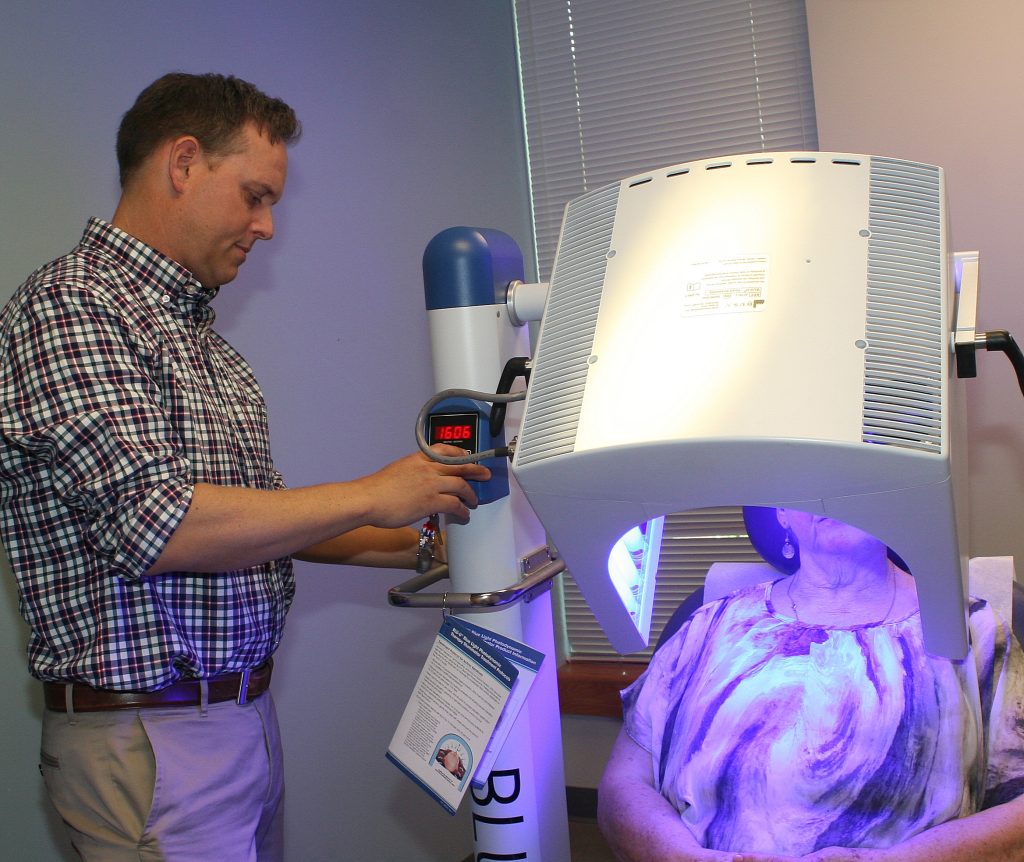
“Our skin does change as we age,” acknowledges Dr. Eric Challgren of Southern Dermatology & Skin Cancer Center in Raleigh. “But skin damage owes less to how old we are than to how we have exposed and cared for our skin in our younger years. And the longer you live, the more sun exposure you’ve had—so sun damaged skin can certainly be considered a health problem of aging.
Health&Healing: How does our skin change as we age?
DR. CHALLGREN: Age does play a role, because skin loses its elasticity over time. So, as we get older, we go from having nice tight skin to skin that sags and wrinkles. And those changes are compounded by long-term exposure to ultraviolet (UV) radiation—sunshine. UV rays destroy collagen and thin the skin, degrading its texture, and further eroding its elasticity. In fact, much of the skin damage that we attribute to aging—wrinkling, discoloration, leathery skin—is actually the result of chronic sun exposure.
However, many things contribute to skin changes as we age, including smoking, diet, and exposure to pollutants. And it is the cumulative impact of multiple factors that results in many of the skin problems we treat. So, it’s not surprising that the majority of our patients are older.
Make no mistake: sun damage is a major health issue. While the cosmetic damage to our skin—wrinkling and discoloration—is problematic, the more serious problem is that the damage from over-exposure to the sun causes skin cancer.
H&H: What is the incidence of skin cancer?
DR. CHALLGREN: There’s no question that we’re seeing increasing amounts of skin cancer; you could describe it as an epidemic. And that certainly makes sense when you realize that the members of the Baby Boom generation are now in their 70s and are seeing the result of decades of sun exposure.
The data are pretty stark. All forms of skin cancer have been on the rise in recent decades, and people in their 60s and 70s are now five times more likely to be diagnosed with malignant melanoma—the deadliest type of skin cancer—than their parents would have been 30 years ago
But there’s a more optimistic aspect to the data. Some of the increase appears to be due to greater awareness. The patients we see are taking more control of their health care and are more inclined to have regular skin checks. As a consequence, we’re catching cancers earlier when they are more easily treated. This is true of melanoma as well as squamous cell and basal cell cancers.
An interesting note in a recent report from the Centers for Disease Control supports the importance of growing awareness. While cancer diagnoses are increasing, melanoma diagnoses have dropped over the last ten years for Americans aged 15-44. These younger generations have been exposed to warnings about sun exposure for most of their lives. In contrast, the Boomer generation grew up with much less awareness of the dangers of UV radiation, were less likely to use sunscreen, and were more inclined to cultivate a tan. And we’re seeing the result now.
H&H: What patterns are you seeing in your practice?
DR. CHALLGREN: Precancerous lesions, or actinic keratoses are probably the most common skin problem we see, especially in the 60-plus population. The most common sites for these pre-cancers are the head and neck, followed by the hands, forearms, and lower legs. That’s not at all surprising, because these are the areas with the most sun-exposure and sun-damaged skin is the principal source of skin cancers.
Beyond pre-cancers, the two most common types of skin cancer are basal cell and squamous cell. These are extremely common, with an estimated one in four people getting a basal cell cancer in their lifetime.
When identified early, almost all skin cancers can be cured with treatment. But too often they’re not identified early enough, because a commonly held—but inaccurate—belief is that while melanoma can be very serious and could become fatal, other cancers—such as basal cell and squamous cell—are not a problem. If detected early, they’re routinely treated successfully. But if caught late they can be life threatening.
H&H: What do you advise your aging patients about skin health?
DR. CHALLGREN: The most important advice I can offer—to anyone—is to use sunscreen and, especially as you get older, to get regular skin exams. These very simple habits have a huge impact and may be life-saving.
Preventing sun damage is the most important thing you can do for overall skin health, so using sun protection is basic, and it’s never too late to start using it.
Treating the precancers and catching cancer early is critically important, so regular skin exams are essential for checking for pre-cancers. We often just lightly freeze them off, which takes away the risk of cancer developing. If not removed, about one in ten pre-cancers will turn into cancer. But if we catch them early, they’re not a problem at all.
If you have a history of sun exposure or a family history of skin cancer, an annual skin cancer screening isn’t just a good idea—it could save your life.
Despite the increased incidence of skin cancers, I see much that’s encouraging. Awareness of harm caused by sun damage is significantly increased, and people are taking better preventive care, and are more willing to get skin checks. Consequently, we’re catching cancers at earlier stages and treating precancers more effectively. Additionally, treatment options and success rates—including for even advanced stages of melanoma—have improved. And we now have a rich array of options for repairing and restoring sun-damaged skin.
Repairing Sun Damage
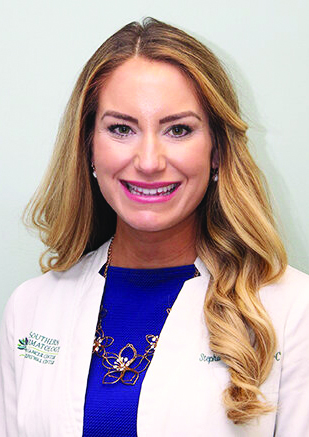
“Without a doubt, age takes a toll on our skin,” says Stephanie Pascale, a family nurse practitioner in Southern Dermatology’s Skin Renewal Center. “That is certainly something we see every day. But perhaps it’s more accurate to say that it is the sun and years together that ages our skin.
“Other factors, such as smoking, genetics, and disease, play a part. And we also lose collagen as we age—a natural process that has significant impact on skin texture. However, by far the single most significant cause of age-related skin damage is exposure to ultraviolet (UV) radiation—the sun.
“Protection from sun exposure is the best way to prevent photoaging,” notes Ms. Pascale, “and, happily, there is much more awareness now and willingness to use sunscreen and protective clothing. But in the Skin Renewal Center we also have an extensive array of options to help repair it.
“Treatments vary with age and the degree of sun damage,” she explains, “whether we’re treating the scars from acne or cancer surgery, discoloration caused by decades of sun damage, or restoring the collagen lost over time.”
Many Tools
“Our toolbox is extensive,” says Ms. Pascale, “including lasers, peels, intensive light treatments, and more. But, since each of these tools works slightly differently, it’s essential to match the patient with the right treatment or combination of treatments. For example:
“Microneedling, a treatment that helps stimulate collagen production, is an effective method for treating acne scars. We also use it for melasma patients with olive complexions because it doesn’t put heat under the skin, which would make their discoloration worse.
“Peels are an extremely effective option for treating the brown and gray patches of hyperpigmentation (melasma). My favorite is what’s called the Perfect Peel. By taking the dead, congested skin cells off the surface, it helps with tone and texture, and removes brown spots, while also improving skin texture.
“We also have a wide variety of laser treatments—each designed for a specific skin issue,” she notes. “The halo laser, for example, is used for discoloration and texture problems, and to treat actinic keratoses (pre-cancers). It’s ablative—meaning that it targets the top surface of the skin, addressing pigmentation and texture. Then the non-ablative version goes below the surface of the skin to stimulate collagen. Importantly, it requires less downtime than other laser treatments and provides six to eight months of collagen simulation post-treatment.
“Among our most powerful tools is the BroadBand Light (BBL) laser, which uses intense pulsed light therapy (IPL). This technology delivers broad-spectrum visible and infrared light energy into the skin to regenerate skin cells and improve skin health. It’s an extremely effective method—with minimal downtime—for addressing pigmented skin, melasma, and rosacea.”
Medical Issues
“The more common issues we see at the Skin Renewal Center are fine lines, wrinkles, pigmentation problems, and acne—primarily aesthetic concerns,” notes Ms. Pascale. “Our treatments are cosmetic, but also have important medical connections. For example, we’ll often recommend regular photodynamic therapy treatments for patients with multiple pre-cancerous spots. Additionally, we also see and treat problems reflecting other medical issues—including stress—that exacerbate conditions such as rosacea or psoriasis. Certain conditions that require special attention. For example, you have to be ultra-sensitive and careful with rosacea patients, and patients with chronic conditions are often on medications that are photosensitive, so we have to tailor treatments carefully.
“Fortunately—and often with a combination of therapies—we’re able to deal with both types of issues,” she says. “With some treatments, while I’m aesthetically making you feel better, I could also be treating the disease itself.”