Cynthia Gregg, MD – Face & Body Specialists
For more information about the practice, contact:
CYNTHIA GREGG, MD, FACS
FACE & BODY SPECIALISTS
Cynthia Gregg, MD, FACS
3550 NW Cary Parkway
Suite 100
Cary, NC 27513
Telephone: (919) 297-0097
https://cynthiagreggmd.com

Dr. Cynthia Gregg, of Cynthia Gregg Face and Body Specialists in Cary, has a special perspective when considering the issue of healthy aging. As a facial plastic surgeon, she understands better than most how years and other factors contribute to what we call “aging” and how it is reflected in our appearance.
“As we age,” explains Dr. Gregg, “the very shape of our face changes, moving downward and inward. It happens in stages, starting at about age 30, with different changes occurring in every decade of our lives. It’s a gradual process of loss—of the skin’s collagen, elastin, and ability to hold hydration. We also lose muscle and fat and, eventually, bone. When you add gravity, the result is drooping skin, flattened cheeks, sagging jawlines, and double chins.
“The rate at which this happens and what goes first is individualized and largely genetic,” she adds, “but eventually it happens to us all and is, at least in part, responsible for the look of aging.”
Health&Healing: When you say “in part,” what do you mean?
DR. GREGG: Although we all experience the same biological changes as we get older, the aging process is influenced by many other factors and is therefore unique for each of us. Some things—such as our genes—are out of our control. But healthy aging is affected not only by the choices we make (see box), but also by how we respond to societal influences.
I would argue that the two factors that have the greatest impact on the aging process are sun exposure and stress. Happily, there is much better understanding today about the impact of sun exposure. However, I think people underestimate the impact of stress on how they age. I see it so often in the patients who come in when they’ve lost a family member or have gone through a major transition in life. They’ll say: “I don’t know what happened to me! I look so old!” Stress takes a toll in so many ways. It affects our sleep; we may not eat well; our immune systems are compromised. There are so many variables, and they all add years to our appearance.
Healthy Choices for Healthy Skin
“We offer many options for repairing and rejuvenating aging skin,” says Dr. Gregg, “but the best anti-aging techniques are often the personal choices each of us makes throughout our lives. Among the most important:
Sun protection: A lifetime of sun exposure causes wrinkles, age spots, and other skin problems, and increases the risk of skin cancer. So, use sunscreen, stay out of the sun at peak hours, and wear protective clothing.
Don’t smoke or vape: Nicotine causes aging of the skin by constricting blood vessels, lessening blood flow, and depleting the skin of oxygen and nutrients essential for skin health. It also damages collagen and elastin fibers. Because nicotine negatively affects wound healing, there are certain procedures that we won’t do on someone actively using any kind of nicotine product.
Eat a healthy diet. A healthy, balanced diet—with plenty of fruits, vegetables, whole grains, and lean protein—is critically important for overall health and that includes skin health. Fresh fruits and vegetables may be especially helpful at preventing damage that can lead to skin aging; adequate protein helps with wound healing. Some supplements may be helpful as well. In contrast, highly processed foods, sugar, and other refined carbohydrates will contribute to aging.
Manage stress: Excess stress is an insidious health issue, and a major contributor to aging. Counter stress with plenty of sleep, stress reduction activities such as meditation, and exercise.
Societal trends can also be enormously powerful. There’s no better example of this than the Baby Boom generation who, when young, pursued the social ideal of a “healthy” tan. Now in their 60s and 70s, they’re dealing with an epidemic of problems from damaged and badly aged skin. Today’s social influences—shaped by social media—are among the challenges I face every day in my practice.
H&H: What are those challenges?
DR. GREGG: Misinformation is the major one. Facial plastic surgery is not magic. So, correcting misinformation and helping patients to understand what’s possible and what’s not is one of the most important and challenging parts of my job.
Beauty standards have existed for centuries, and “definitions” of physical attractiveness have changed from one era to another. But the natural tendency to care about one’s appearance has been hugely influenced by social media, and the focus on beauty, beauty products, and enhancements. Whether it’s the trend to pursue a certain enhanced look (“Instagram Face”) or the widespread impact of GLP-1 drugs on facial appearance (see box), social media standards and images predominate.
This often creates a problem of unrealistic expectations. Too many patients come in wanting to be transformed to match the images presented by the Internet. What they don’t understand is that the on-line images they admire are filtered and AI-enhanced. Replicating those images is often impossible because they ignore anatomy and individual considerations. In fact, in manipulating those images, filters are doing things that can’t be done surgically!
And the greatest problem I have with Dr. Google’s advice is that it neglects the most important characteristic of facial plastic surgery: which is that it’s all about a single, unique, individual patient. So, realistic expectations are the first part of every consultation about any cosmetic procedure. And, because I know that there are emotional/mental issues that cannot be fixed by changing a physical attribute, we sometimes have to say “no” to a patient whose expectations are unrealistic.
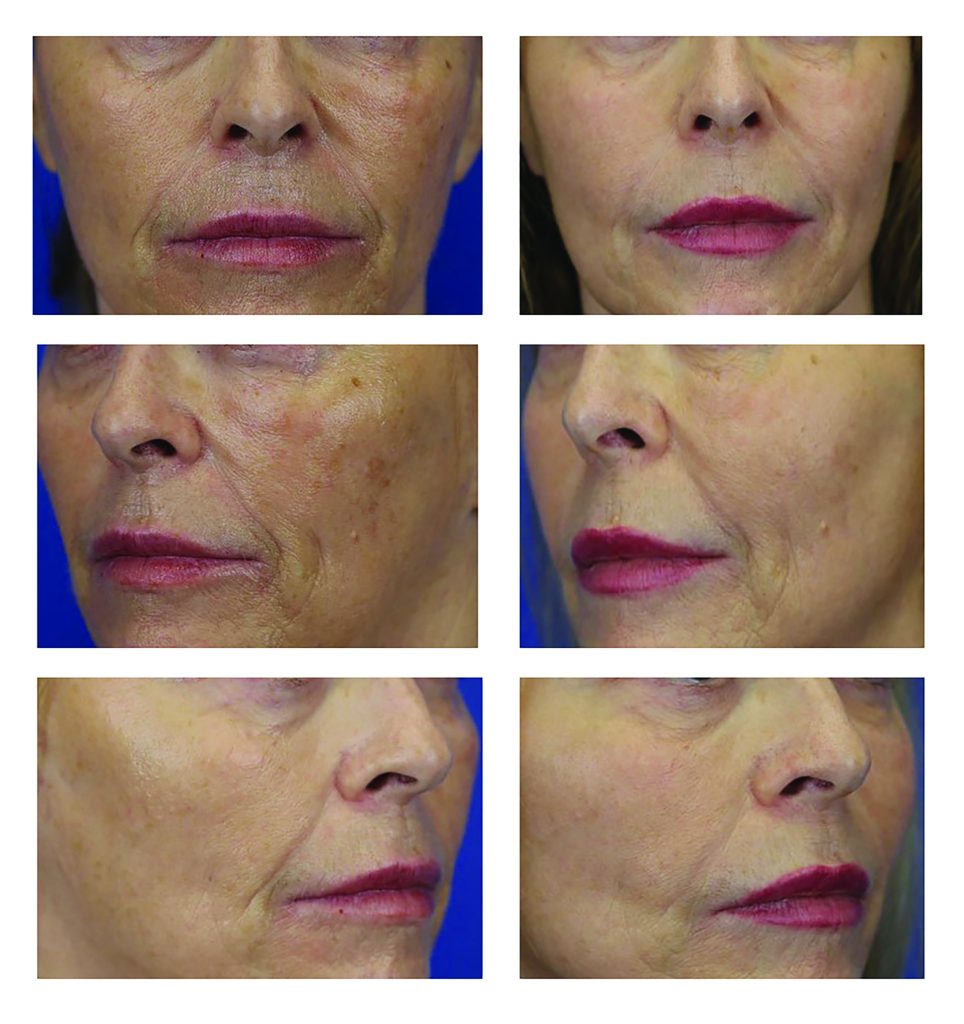
The “right” choice is the one that respects the patient’s anatomy as well as their wishes. And my goal—always—is to achieve the patient’s goal in a natural way.
A typical example of this problem is a patient I saw recently who wanted to fix the problem she has with bags under her eyes. Social media images convinced her that this could be fixed simply. Unfortunately, her problem is genetic—a family characteristics. And I had to explain that because her facial anatomy is different from that of the people in the on-line images, the solution to her problem may not match her expectations.
So, a lot of education is required in my pre-op consultations. People need to understand their unique underlying anatomy, and how it shapes the options available to them. As I commonly explain: “I can’t change what God gave you. I can uncover it and try to improve it; but the underlying anatomy is still there.” So, to look natural—which is always the goal—we have to honor and respect their unique anatomy.
H&H: What is a realistic, healthy approach to rejuvenating the aging face?
DR. GREGG: First of all, it’s a unique experience for each patient. The challenge—and the joy—of my work is to find that response. And it’s something that’s not done to a patient, but with them. It begins with understanding what they want to change about their appearance.
One of the most exciting aspects of my work has been the extraordinary expansion of new products and techniques for facial rejuvenation. In the early years of my career, options were much more limited and were typically restricted to surgical procedures. Today, we’re able to offer our patients what I like to call a “buffet” of options—many of them non-surgical and all of them improved methods of providing facial rejuvenation. Without surgery we can lift and fill changing faces, erase wrinkles, and rejuvenate skin. And what is especially important, these products and procedures allow rejuvenation in a most natural way.
My goal always is to find the right solution for each individual patient—an objective that blends art and science. “Science” refers to what can be done technically—both what surgery can accomplish and what the patient’s anatomy, skin quality, and genetics permit. The “art” of plastic surgery refers to seeking the best aesthetic solution, and—always—I’m committed to finding the most natural approach. The best outcome is when a patient tells me that their friends say how refreshed they look, but can’t put their finger on what was done.
GLP-1 Weight Loss and the “Aging Face”
Last year it was reported that about one in eight Americans have used GLP-1 drugs—medications that are proving to be important treatments for type 2 diabetes and obesity. “This is a significant, positive trend to address serious health care issues, thus contributing to longer, healthier lives,” says Dr. Gregg. “Ironically, that slimmer, more youthful looking body comes with an older face. What we’re learning is that rapid weight loss also contributes to rapid facial aging.
“This is more than appearance. Rapid weight loss causes you to lose subcutaneous fat from your face and neck—a loss of volume that’s characterized by gauntness, sunken cheeks, new wrinkles, and loose skin on the face and neck. Such facial changes occur naturally with age,” explains Dr. Gregg, “because we all lose subcutaneous fat in the face as we get older. But rapid weight loss can speed up that aging process.
“And the problem is not simply a loss of volume. Rapid weight loss results in a decrease in the dermal white adipose tissue—a significant source of the stem cells that play a crucial role in skin regeneration and healing. Additional, decreased consumption means a loss of important nutrients that contribute to skin health.”
Treating the Aging Face
“The health benefits of weight loss are considerable,” acknowledges Dr. Gregg, “so the challenge is to address the negative impact on skin health that occurs with rapid weight loss. For one thing, I would recommend that people using GLP-1s increase their protein intake, which will address the loss of nutrients that support the skin’s ability to heal.
“Clinically, we have a number of options—both surgical and non-surgical—for treating facial aging issues that occur with the use of GLP-1s,” says Dr. Gregg. “What’s important is that the treatments not only replace lost volume and increase collagen production, but also target the stimulation of the adipose-derived stem cells so critical important to skin health. Such treatments include dermal fillers, biostimulator injectables, microneedling, and PDGF+.”
Each patient has unique facial anatomy and skin quality, emphasizes Dr. Gregg. “So, reducing the facial aging effects of rapid weight loss requires a thorough assessment to determine which option will best meet their aesthetic goals. Our Aesthetic Nurse Injectors are all highly experienced in working with patients who want to eliminate the visible effects of rapid weight loss, and can determine if non-surgical methods will meet a patient’s goals, or if surgical options should be considered.”