TMJ & SLEEP THERAPY CENTRE OF
RALEIGH-DURHAM
For more information, contact:
Charles Ferzli, DDS, FAACP, DABCP, DABCDSM, DABDSM
TMJ & SLEEP THERAPY CENTRE OF RALEIGH-DURHAM
1150 NW Maynard Road, Suite 140
Cary, NC 27513
Telephone: (919) 323-4242
RaleighTMJandSleep@gmail.com
https://RaleighTMJandSleep.com
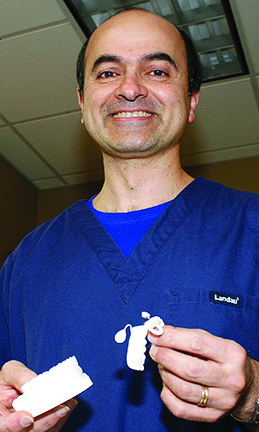
“It is impossible to ignore the powerful role that inflammation plays in virtually all disease—whether as a causal factor or an impediment to healing,” observes Dr. Charles Ferzli of the TMJ and Sleep Therapy Centre in Cary. “And it is equally impossible to ignore the critical relationship between inflammation and sleep. Because, when it comes to inflammation, what affects the body most is poor sleep.”
Health&Healing: What is the connection between inflammation and sleep?
FERZLI: They can’t be separated. Inflammation—from disease, trauma, allergies, or stress—disrupts our essential sleep patterns; disrupted sleep produces more inflammation.
The fact is, there is no path to optimal health that doesn’t involve what we might call a good night’s sleep. Because sleep—in all its stages—is essential for all aspects of our health, providing the foundation for healing, growth, and cognitive processing. When we don’t sleep, we don’t learn, we have trouble remembering things, and we don’t heal. We have more inflammation, we feel more pain, we’re more tired and irritable. We have more anxiety, and we suffer more from depression.
It is during sleep that the hormones are secreted that allow children to grow and that allow the body to rest and regenerate. And it is during sleep that the body heals. Deep sleep stages promote the production of reparative hormones—which play an important role in reducing inflammation.
In contrast, losing sleep—for even part of one night—can trigger the key cellular pathway that produces tissue-damaging inflammation. So, it can be a vicious cycle, with poor sleep driving inflammatory responses, which themselves can drive additional sleep issues. And that cycle is reflected in numerous studies showing that people with shorter or poorer quality sleep tend to have higher mortality risk as well as increased severity of many inflammatory and chronic diseases, such as high blood pressure, acid reflux, heart problems, and diabetes. These conditions are key indicators of inflammation, so if you have them, you may also have sleep problems.
H&H: What are other sources of inflammation?
FERZLI: It’s important to remember that inflammation is the body’s natural response to assaults from injury, disease, and toxins. This normal inflammatory response is the important first step towards healing. Problems occur when the assaults are so numerous that inflammation becomes chronic and systemic.
Systemic inflammation is insidious. The assaults on our immune system can come from many sources beyond injury or illness; from the food we eat, from allergies, from the emotional stresses of everyday life. and, most importantly, from issues that interfere with sleep.
These stressors can start a cascade of effects. A poor diet or allergies, for example, results in congestion, which leads to poor breathing; poor breathing interferes with normal sleep cycles. Sleep problems prevent healing. Clenching and grinding during sleep produces jaw pain. And so on.
An example of this complexity are the many patients I see who grind their teeth. The first question I ask them is if they are on any antidepressants. That’s because, with many commonly used antidepressants, one of the major side effects is clenching. So, the medicine they’re taking to treat their anxiety causes them to clench more—seriously disrupting sleep. In turn, lack of sleep can make them more prone to anxiety or depression. It’s a vicious cycle: the medications worsen sleep, and the sleep disturbance causes or exacerbates depression or anxiety.
Similarly, sleep problems are often connected to nutrient insufficiency and digestive problems. For example, clenching your teeth at night affects the vagus nerve, which controls the digestive system. In addition, vitamin D deficiency can trigger sleep difficulties and cause vitamin B levels to plummet. So, fixing a sleep problem may also require dietary changes and nutritional supplements. Everything is connected.
H&H: What are the signs of systemic inflammation?
FERZLI: The majority of the patients I see are dealing with sleep issues or with jaw pain. Their symptoms vary, of course, and no one has a single, isolated problem. Patients will come here because they’re not sleeping well. Or they have ear pain, but their ENT physician cannot find anything wrong with their ears. They may have headaches or jaw pain. Their dentist may refer them because their teeth are damaged from clenching and grinding. Their spouse may send them here because of snoring.
In all these cases, the symptoms are signals of a complex inflammatory issue that interferes with sleep.
Often, the issues these patients face resulted from a cumulation of problems over time. For some, it may have been allergies that caused nasal congestion, which resulted in mouth breathing, which interfered with sleep or caused clenching; excessive stress may have made things worse. For others periodontal disease, or diabetes, or jaw misalignment may have triggered the inflammatory response.
The good news is that whatever the combination of factors that began the cycle of poor-sleep-more-inflammation, that cycle can be reversed; healing can and does occur.
H&H: How is that done?
FERZLI: Ultimately, the goal is to reduce inflammation and improve sleep quality. Since many factors contribute to sleep and inflammatory issues, healing also involves many different things. It’s a gradual process, one step at a time.
The very first step is testing and evaluation. We need to identify the sources of their inflammation and—just as important—the multiple factors involved, including diet, stress, structural issues, medications, and disease.
The next step in the healing process is to quickly address the structural issues that cause pain, interfere with sleep, and impair breathing. An oral appliance can provide immediate relief and pave the way for further healing. A correctly designed oral device will prevent the lower jaw and tongue from physically falling back and crushing the airway during sleep. That’s critically important because, when you adjust the jaw position at night, allowing for better sleep, you are addressing many problems at once: better sleep is restorative; proper jaw positioning relieves tension and allows for improved breathing; better breathing supports better sleep, and so forth.
Breathing issues are critically important, and may need to be addressed in other ways. Sometimes we need to treat nasal problems as well—either by referring the patient to an ENT to address structural problems, or by managing the nasal passageway with nasal sprays or dilators. Mouth breathing is the source of many sleep and jaw problems, contributing to clenching and interrupted sleep. So, sometimes patients need to use exercises to improve their ability to breathe well from their nose.
We look at problems from all angles, and our treatment programs might therefore include referral to a physical therapist, major dietary changes, or referral to an allergist or ENT physician.
The next steps in the healing process can be described as a partnership with the patient. A lot of what we do is to create awareness in the patient of the many factors contributing to inflammation and sleep problems. Healing may ultimately involve additional therapy or even surgery. But it may also require important dietary or lifestyle adjustments. It’s a many-layered approach.
Mouth Issues,
Inflammation,
and Overall Health
“It’s been said that the mouth is the gateway to the body,” notes Dr. Ferzli. “Certainly, in my practice, I see countless examples where issues with the mouth, jaw, and breathing have profound effects on overall health. And, again, the connection to the poor sleep/inflammation cycle is inescapable.
“A classic example of this inflammatory effect is periodontal disease—or gum disease. It’s an infection of the tissues—the gums and bone—that surround and support the teeth,” he explains. “Periodontal disease is an inflammatory condition just like high blood pressure, diabetes, and heart disease. So, when we see somebody who has sleep problems, such as sleep apnea, we also find that a hundred percent of those patients have some form of periodontal problems and possibly other systemic health issues.
“Similarly,” notes Dr. Ferzli, “when see a patient with periodontal disease, that’s a clear sign that there are other significant health issues. Because, the bacteria in the mouth that we see in periodontal patients have been linked to diabetes, heart disease, respiratory disease, Alzheimer’s, cancer, and other systemic diseases.
“So we ask: ‘Do you have high blood pressure? Do you have diabetes? How do you sleep? Do you have any pain?’ We’re looking for systemic inflammation because all these issues are related. They’re all comorbid conditions and treating one treats the other.”
And the link between periodontal disease and diabetes is particularly strong, notes Dr. Ferzli. “People with diabetes are more likely to have periodontal disease than people without diabetes, probably because they are more susceptible to contracting infections. Furthermore, research suggests that the relationship between diabetes and periodontal disease goes both ways. Periodontal disease may make it more difficult for people with diabetes to control their blood sugar, increasing the risk for diabetic complications. In fact, periodontal disease is often considered a complication of diabetes, and those who don’t have their diabetes under control are especially at risk.”
When treating periodontal disease, Dr. Ferzli emphasizes, “it’s essential to remember that this is a systemic inflammatory disease. Traditional treatments—such as scaling and root planning, and deep cleaning of affected tooth and root surfaces—address symptoms, but not the root causes. As with all inflammatory diseases, it’s essential to address the combination of factors involved, including diet, stress, breathing issues, and—most important—sleep disruption.”