SOUTHERN DERMATOLOGY &
SKIN CANCER CENTER
For more information about skin conditions and their treatment, contact:
SOUTHERN DERMATOLOGY and SKIN CANCER CENTER
An Affiliate of Anne Arundel Dermatology
Gregory J. Wilmoth, MD
Eric D. Challgren, MD
Margaret B. Boyse, MD
Laura D. Briley, MD
Tracey Cloninger, PA-C
Stephanie S. Pascale, MSN, FNP-C
4201 Lake Boone Trail, Suite 200
Raleigh, NC 27607
Telephone: (919) 782-2152
THE SKIN RENEWAL CENTER AT SOUTHERN DERMATOLOGY
4201 Lake Boone Trail, Suite 207
Raleigh, NC 27607
Telephone: (919) 863-0073
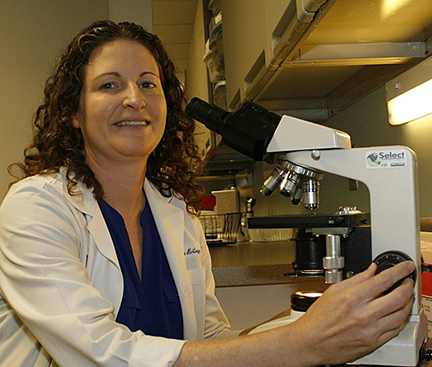
Stress, that feeling of emotional or physical tension, takes many forms: anger and frustration; worry over unpaid bills or a sick child; aches and pains; injury or illness; exhaustion from lack of sleep. What does it have to do with your skin? “Everything,” says Dr. Laura Briley of Southern Dermatology & Skin Cancer Center in Raleigh.
“Trauma, emotional stress, diet, genetics, and disease are all stressors. But regardless of the source, the physiological response to stress is inflammation, and inflammation is the core issue for so many of the skin problems we treat. Eczema, seborrheic dermatitis, psoriasis, rosacea, even acne are all inflammatory conditions. And if inflammation is not the cause, it certainly exacerbates these problems.”
Health&Healing: What role does stress play in the skin diseases you treat?
DR. BRILEY: Many autoimmune diseases emerge when a person’s life is out of balance—when there is, perhaps, too much stress. When patients take on too many burdens and their lives tilt too much in one direction, their diseases respond by getting worse, because stress increases inflammation in the body. And inflammation is at the root of autoimmune diseases such as psoriasis.
Breakthroughs in Treatment
“Treating inflammatory disease has always been a challenge,” notes Dr. Briley, “because it involves the whole immune system. Twenty years ago, for example, patients with psoriasis were given medications to suppress their immune response. The problem with that approach was that it inhibited the whole immune system—rather than just treating the one part that’s out of balance.
“When you totally suppress the immune system,” she explains, “you cause other problems—sometimes allowing skin cancers to grow because the immune system isn’t functioning properly. Today, newer biologic drugs target and treat the specific part of the immune system that’s out of balance—and only that part.
“New biologic drugs continue to come out every year, giving even more opportunity for patient-specific treatment,” she adds. “There are unique classes of them, depending on what pathway they suppress, and we can target the medication to the specific patient in a way that was simply not possible with the older meds.”
The results of these advances, she says, “are remarkable. ‘Dave,’ a 75-year-old patient I saw today illustrates the power of these medications. When I first met him—probably 10 years ago—about 50 percent of his body was covered in psoriatic plaques. Previous treatments had been problematic—he’d been on a biologic medication but was taken off it because of lab abnormalities. And he was really suffering; he wasn’t suicidal, but he was severely depressed. After reviewing his lab results, we were able to get him on another biologic, which reduced his symptoms from 50 percent to 2 percent! That’s not a cure, but it’s nearly complete remission, and it really changed his mental health. “That is the power of the new biologic drugs. By targeting the specific problem, we’re able to provide symptomatic relief—quickly—but without the dangerous side effects of medications that address the entire immune system. They’re much better drugs than those available in the past. For Dave, these meds not only provide tremendous relief, but don’t expose him to side effects that would affect his liver or suppress his immune system. And he’s done very well with it.”
The stressors we experience in everyday life are certainly triggers, but many other factors contribute to systemic inflammation. Among these are genetics and body composition, disease, and poor sleep. Poor diet is a major culprit. There’s no question that reducing or eliminating inflammatory foods—such as carbohydrates, sugar, processed and greasy foods—can be extremely helpful in reducing problems associated with inflammatory skin conditions.
The cumulative effect of all these triggers can cause an out-sized immune response or chronic inflammatory condition.
Psoriasis and Rosacea
H&H: In what diseases does stress play a major role?
DR. BRILEY: We treat many such inflammatory diseases. Psoriasis may be the best example of this. Severe plaque psoriasis is a painful, chronic, auto-immune disease that presents as scaly skin lesions that may cover as much as 90 percent of the body. It’s caused by a glitch in the natural cycle of skin cells, where they replicate too quickly, causing one part of the immune system to become hyperactive—basically throwing the entire immune system out of balance. This leads to a build-up of excess skin cells forming scaly plaques on the surface of the skin, which may be itchy or painful.
And it can have a profound psychological effect as well as a physical one. Patients often limit activities to avoid being seen. And studies have found that people with psoriasis tend to have lowered self-confidence and experience higher rates of anxiety and depression.
As with most things, psoriasis is caused by a combination of factors. Genetics are definitely a big player, but only one factor. A person can have those genes their whole life, and it doesn’t progress. However, with enough environmental hits, the genes get switched on. Then you have flare-ups.
Factors that can trigger the expression of the otherwise dormant psoriasis genes may be stress, a strep-infection, thyroid disease, even obesity. That’s because inflammatory markers are made in fat cells, so the bigger your fat cells, the more inflammation you’ll have in your body. Thus, if you gain a lot of weight and you have the genes, that can be the trigger.
For a long time, the greatest challenge in treating psoriasis was the limited options available in medications. Happily, that has changed dramatically. Biologic medications (see box) allow us to treat psoriasis by targeting specific parts of the immune system, significantly reducing adverse side effects.
With the new biologic medications, we can expect 90-100 percent skin clearance, compared to (at best) 50-75 percent skin clearance with the older medications.
H&H: Other examples?
DR. BRILEY: Rosacea is a classic example—not only of an inflammatory condition, but of the complexity of such diseases. It’s a kind of subset of adult acne that is more chronic in nature, and it can be an exasperating, incurable problem—flaring in response to a wide number of triggers. It typically begins slowly with intermittent redness along the cheeks and the nose, with a strong tendency to blush easily. But it includes a broad spectrum of symptoms ranging from irritation and redness to extremely oily skin and pimples.
I actually see rosacea patients as a spectrum. Some people just have extra redness to their skin and find they flush more easily; others will have more pimples, similar to but lasting longer than acne pimples. For some, it’s a lifelong issue that just flares occasionally; for others it progresses, becoming increasingly problematic; and in a few cases (less than 5 percent), it may result in rhinophyma, a skin condition that causes the nose to gradually become large, bumpy and bulbous.
Triggers for rosacea also vary, and each individual is likely to respond uniquely. The number one trigger for rosacea is exposure to the sun, so everyday frequent application of a good sunscreen, whenever exposed to daylight, is the best treatment of all.
Emotional stress is the number two trigger, but there are many others, including alcohol and specific foods—something that differs considerably among patients. Red wine and spicy foods are common triggers; smoking and obesity—major causes of inflammation—are also triggers.
It’s important for patients to realize that there are different types of rosacea, and each responds well to different treatment. The good news is that, while rosacea cannot be cured, virtually all its forms—from mild to severe—can be well-managed. It’s a highly individualized condition, so treatment plans vary accordingly. We now have new, low-dose, long-acting, slow-release antibiotics that are often effective. Other therapies include topical medications and laser therapy.