CENTRAL PHARMACY
& CENTRAL COMPOUNDING
CENTER
For more information about these community pharmacy/ education/wellness centers, contact:
Jennifer Burch, PharmD
Sejjal Patel, PharmD
Jhuvon Francis, PharmD
Erica Kelly, PharmD
Chad Palumbo, PharmD
Luke Slotterback, PharmD
CENTRAL PHARMACY
2609 North Duke Street, Suite 103
Durham, NC 27704
Telephone: (919) 220-5121
Fax: (919) 220-6307
www.centralpharmacync.com
CENTRAL COMPOUNDING CENTER
6224 Fayetteville Road, Suite 104
Durham, NC 27713
Telephone: (919) 484-7600
Call to schedule a consultation with our pharmacists
www.centralcompounding.com
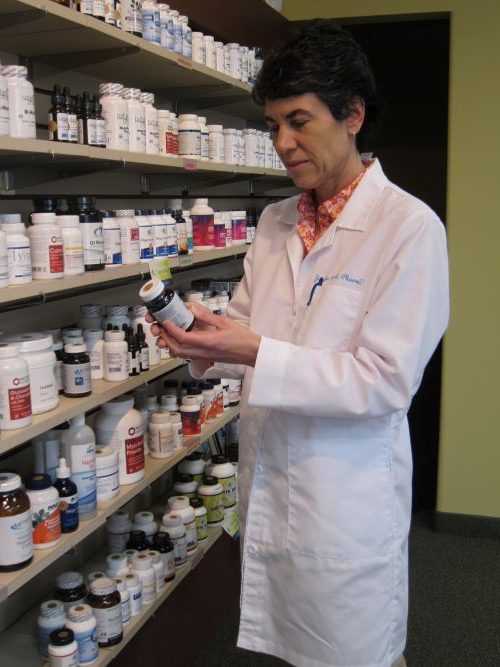
It’s a common request at Central Pharmacy and Central Compounding Center in Durham: “What can you recommend to help me sleep? I’m not sleeping, I’m stressed out at work; I’m taking care of my aging parents and my kids—it’s all too much!”
“Responding to such requests,” says pharmacist Jennifer Burch, “is a critically important part of what we do. Pharmacists are the most over-educated and underutilized health care professionals in America,” she adds with a smile. “As health care professionals trained in drug therapy management, we are perfectly positioned to help patients with questions related to over-the-counter drugs, either alone, or in combination with other medications.
“Compounding pharmacists are especially suited to serve as the knowledgeable ‘bridge’ between trying at-home or over-the-counter options and seeking medical care,” she adds. “The medications we prepare are individualized, to provide customized dosages, eliminate allergens and irritants, and minimize side effects. These considerations are also important in evaluating non-prescription medications.
“So, while prescription medications are the primary focus of our practice,” says Dr. Burch, “we also offer many supplements and non-pharmaceutical options for addressing health issues and providing symptom relief (see “Top Supplements for Stress, Inflammation, and Disease Prevention” below). And, as with the prescription medications we compound, finding the right supplement, in the right dose, requires an individualized approach. So, when asked for advice about “what to take?” for stress relief or sleep problems, the response will vary.”
Finding the “Right” Supplement
Navigating the world of over-the-counter remedies and nutritional supplements is a challenging task—especially in the age of ‘Dr. Google,’ notes Dr. Burch. “People come in seeking relief for a wide variety of symptoms. Sleep issues are probably the most frequent problem; gut health is another big one; and stress is always an issue. These are all inflammatory issues, and supplements can be helpful in addressing them.
“But supplements are no different from the prescription medications we compound: one size doesn’t fit all. So, we work through a process to understand the sources of their sleep problems and what might best address them: What’s going on in your life? Are you stressed? Are you dealing with hormone imbalances? Should we do some testing?“When it comes to finding an effective supplement for sleep and stress issues,” says Dr. Burch, “one of the first things we want to consider are cortisol levels. And one of the options we want to explore is the use of CBD.”
Cortisol
“If you’re dragging, not sleeping well, feeling stressed, and even depressed,” notes Dr. Burch, “a likely cause is hormonal imbalance—and even more likely a problem with cortisol levels.
“Hormones work together—so imbalances are complex. Too little of one might also impair the effectiveness of another. So, it’s essential to tease out the precise nature of the imbalance in order to treat it effectively.”
Cortisol imbalances, says Dr. Burch, are a good example of that complexity. “In proper quantities, cortisol helps regulate many bodily functions, and is perhaps best known as the ‘stress hormone,’ because it regulates the body’s stress response.
“As your body perceives a threat, the adrenal glands release cortisol into the bloodstream, causing an increase in your heart rate and blood pressure. That’s the natural ‘flight or fight’ response that gives us a burst of intense energy and heightened senses. In moments of danger, it can be quite helpful. But problems occur, however, when the flight or fight response becomes chronic. Prolonged, unrelieved periods of stress can cause severe cortisol imbalances, with profound negative effects on our health.
“Relieving stress and restoring cortisol balance,” asserts Dr. Burch, “is an essential foundation to good health. And that begins with testing, because symptoms for such imbalances are many and varied, and often only tell you that something is out of whack—but not what.
“Accurate testing for the purpose of addressing hormonal imbalances is a process rather than a one-time event,” emphasizes Dr. Burch. “The initial comprehensive panel allows us to recommend adjustments—using bioidentical hormone replacement therapy (BHRT) or supplements.
Typically, we’ll make gradual adjustments, monitoring the patient’s experience, and will retest periodically to be sure the desired balance is achieved.
“Addressing the problem of low cortisol levels is most often a matter of stress reduction and lifestyle adjustments—and supplements can play an important role. A healthy, non-inflammatory diet—including multivitamins—will help reduce stress. In addition, there are supplements that provide significant relief and aid in maintaining balanced cortisol and DHEA levels. One that we recommend is Adren-All®, which provides targeted amounts of vitamin A and C, pantothenic acid, and other B vitamins hat are critical to adrenal gland function. And dosages can be adjusted according to each individual’s needs.”
Cannabidiol (CBD)
Since its approval in 2014 for over-the-counter sale in North Carolina, CBD has been widely used as an alternative, non-pharmaceutical treatment for pain and other conditions. “CBD is a non-psychoactive set of compounds derived from hemp plants,” explains Dr. Burch. “Unlike marijuana, CBD doesn’t alter your mental state but instead works with your body’s endocannabinoid system—a network of receptors that helps regulate stress response, inflammation, sleep, and pain perception.
Many people are familiar with CBD use as an option for pain management, says Dr. Burch, but may not appreciate how broadly it can be used. “It is effective for all kinds of pain: musculoskeletal, neuropathic, even vaginal pain; it’s a proven treatment for epilepsy; and helps with a range of mood disorders, including anxiety, panic, and PTSD.”
While CBD doesn’t require a prescription, its effectiveness does depend on guidance and education. “We have learned the importance of careful, individualized dosing,” says Dr. Burch. “And we work closely with our patients to find the ‘sweet spot’ that produces the desired result. More is not necessarily better with CBD,” she emphasizes.
Just as important as the dosage, she adds, is the quality of the product. “The hemp plant is much like a sponge. So, you don’t want to use CBD from hemp grown in toxic soil. We carefully vet all products to ensure they have the appropriate level of CBD and are not contaminated with pesticides, herbicides, or heavy metals.”
Top Supplements for Stress, Inflammation, and Disease Prevention
Are supplements necessary for optimal health? “I would argue that they are,” says Dr. Burch, “because—unfortunately—we can’t rely on our food supply for all essential nutrients. So, the foundation of any healthy regimen includes a good multivitamin, a good high-quality fish oil, and a probiotic. Those are the basics—the starting place.
“Beyond that, supplements can play a critical role in disease prevention and in addressing problems associated with stress and inflammation. The following five of these are especially important.”
OMEGA-3 FATTY ACIDS (FISH OIL): Omega-3 fatty acids are essential fats that your body cannot produce on its own, so it’s necessary to obtain them through diet or supplements. These powerful nutrients act as natural anti-inflammatory agents, supporting heart health, brain function, and joint comfort.
Omega-3 rich foods include fatty fish (such as salmon, sardines, and tuna), seeds and nuts (such as flaxseeds and walnuts); and oils (such as flaxseed and walnut oil).
VITAMIN D: Vitamin D functions like a hormone, influencing nearly every cell in your body. It plays a crucial role in immune system regulation, helping your body fight off infections while preventing it from attacking itself through excessive inflammation. Low vitamin D levels are linked to increased susceptibility to illness, chronic fatigue, mood issues, and various autoimmune conditions. Our bodies create vitamin D from sunlight; however, many people are deficient in vitamin D, and it’s difficult to get adequate amounts from food alone, so supplementation is often necessary.
MAGNESIUM: Magnesium is involved in over 300 enzymatic reactions in your body, making it essential for everything from energy production and muscle function to stress management. When you’re stressed, your body burns through magnesium quickly, creating a cycle where stress depletes magnesium, and low magnesium makes you more sensitive to stress. By regulating your nervous system, this mineral acts as nature’s ‘chill pill’ and helps your body respond more calmly to stress. It also supports better sleep quality, reduces muscle tension and cramps, and helps regulate blood pressure and blood sugar levels.
Many people don’t get enough magnesium from their diet, so supplementation is important. Common forms include magnesium glycinate (best for relaxation and sleep), magnesium citrate (good for digestion), and magnesium threonate. Magnesium oxide is less absorbable so it can cause GI upset and diarrhea—a good laxative but not the best way to raise your magnesium levels.
CURCUMIN/TURMERIC: Curcumin is the active compound in turmeric that works by blocking multiple inflammatory pathways in your body, making it a potent anti-inflammatory. Unlike medications that target single pathways, curcumin addresses inflammation from multiple angles, potentially helping with everything from joint pain and digestive issues to cognitive function.
The challenge with curcumin is that it’s poorly absorbed on its own and quickly eliminated by the liver. Look for supplements that include black pepper extract (piperine) or are formulated as liposomal or phytosome preparations to improve absorption.
PROBIOTICS: Probiotics are beneficial bacteria that help maintain a healthy balance in your digestive system, supporting not just digestion but overall health. Your gut houses trillions of bacteria that profoundly influence your immune system, inflammation levels, and even your mood. Research shows that a healthy gut microbiome can reduce systemic inflammation, improve immune function, and influence stress resilience and mental well-being.
Antibiotic use, processed foods, stress, and environmental toxins can disrupt this delicate bacterial balance, leading to increased inflammation and compromised immunity. Probiotic supplements can help restore this balance. The key is to choose products with diverse strains and adequate potency.
Look for refrigerated products or shelf-stable ones with enteric coating to ensure the bacteria survive stomach acid.