Chapel Hill Compounding
For more information, contact:
CHAPEL HILL COMPOUNDING
Zoe Stefanadis, RPh/Owner
105 Conner Drive
Wilshire I building, Suite 1200
Chapel Hill, NC 27514
Telephone: (919) 967-8805
Fax: (919) 967-8205
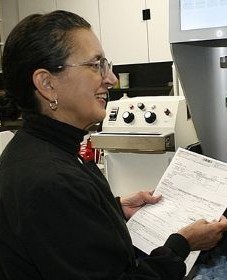
One rarely considers the possibility of ingesting toxins with a daily prescription, but it is not an unlikely hazard, notes Zoe Stefanadis, a registered pharmacist and owner of Chapel Hill Compounding Pharmacy. “Medicines—both over-the-counter and prescription medicines—can be toxic. Because we all respond uniquely to the things we’re exposed to and the things we ingest.”
With that awareness, Ms. Stefanadis and her colleagues use their time, talent, and training to ensure that each of their clients has the safest and most effective medication possible in hand. She notes that each compounded prescription is formulated for a specific client with their physician’s guidance, reflecting their individual health needs taken into consideration.
“Some people have toxic reactions to the fillers in their prescribed medications, decreasing their ability to absorb the product,” explains Ms. Stefanadis. “For example, magnesium stearate may be one of many common fillers used in commercial medications. It is an animal-derived substance, and has the potential to cause anaphylactic shock in those allergic to it. Compounding pharmacists are able to make medications without this potentially toxic filler.
“When compounding medications,” she explains, “we endeavor to offset the effects of toxins by using natural supplements, trying not to subject our patients to anything that they may be sensitive to.
We have an option, for example, of using cellulose capsules—which are vegetable capsules—rather than gelatin.
“At our compounding pharmacy,” she notes, “we have pretty much gotten away from lactose fillers completely. Dextrose is a different type of sugar that a lot of people can tolerate better than magnesium stearate or lactose fillers. Instead of dyes, we use vitamin B, because it has color, which we need in compounding.
During the distribution process of active ingredients, we can see by the color that we’re getting a nice uniform mixture along with our other mechanical means of blending.”
The Value of Genetic Testing
“We’re learning a lot through genomics—whether patients are fast or slow metabolizers, and whether or not they can actually metabolize the medication to the actual active form. Some medications don’t even work, or it may be that the doses, especially for people who are either fast or slow metabolizers, may have to have different strengths to get a true effect. We can compound the specific strength your body needs to be able to assimilate the medication. Occasionally, the difference in a dose can change what that drug treats and its pharmacological effect in the body.”
A perfect example of this, notes Ms. Stefanadis, “is naltrexone, which was developed years ago to block opioids. A 100 mg dose will rescue people who have overdosed on any opioid, connecting to that receptor site and blocking the opioid’s effect. Now we’re finding that low-dose naltrexone is helping people with pain issues, such as fibromyalgia, or who have autoimmune disorders, such as Hashimoto’s. I can compound anywhere from 0.002 mg up to 16 mg and have some really good outcomes. Somehow this lower dosage signals the brain to act differently than the original 100 mg naltrexone did. We’re still not sure exactly the mechanism of action, or how the drug works. When I was in pharmacy school, I would say that the mechanism of action for 80 percent of the drugs was unknown.”
Autoimmune Disorders
“I’ve seen more autoimmune disorders now than in my 30 plus years of being a pharmacist” she says. “There are two factors involved: first, exposure to more toxins, whether environmental or internal stress, and second, we now have the tools and the science to be able to recognize toxins at work in the body. “Some doctors now recommend detox and we carry detox kits that are nutritionally-based and are liver and GI tract cleansers. I’m a big fan of empowering patients to take charge of their own health care and with good guidance they get good outcomes.”