CENTRAL PHARMACY
& CENTRAL COMPOUNDING
CENTER
For more information about these community pharmacy/ education/wellness centers, contact:
Jennifer Burch, PharmD
Sejjal Patel, PharmD
Jhuvon Francis, PharmD
Erica Kelly, PharmD
Chad Palumbo, PharmD
CENTRAL PHARMACY
2609 North Duke Street, Suite 103
Durham, NC 27704
Telephone: (919) 220-5121
Fax: (919) 220-6307
www.centralpharmacync.com
CENTRAL COMPOUNDING CENTER
6224 Fayetteville Road, Suite 104
Durham, NC 27713
Telephone: (919) 484-7600
Call to schedule a consultation with our pharmacists
www.centralcompounding.com
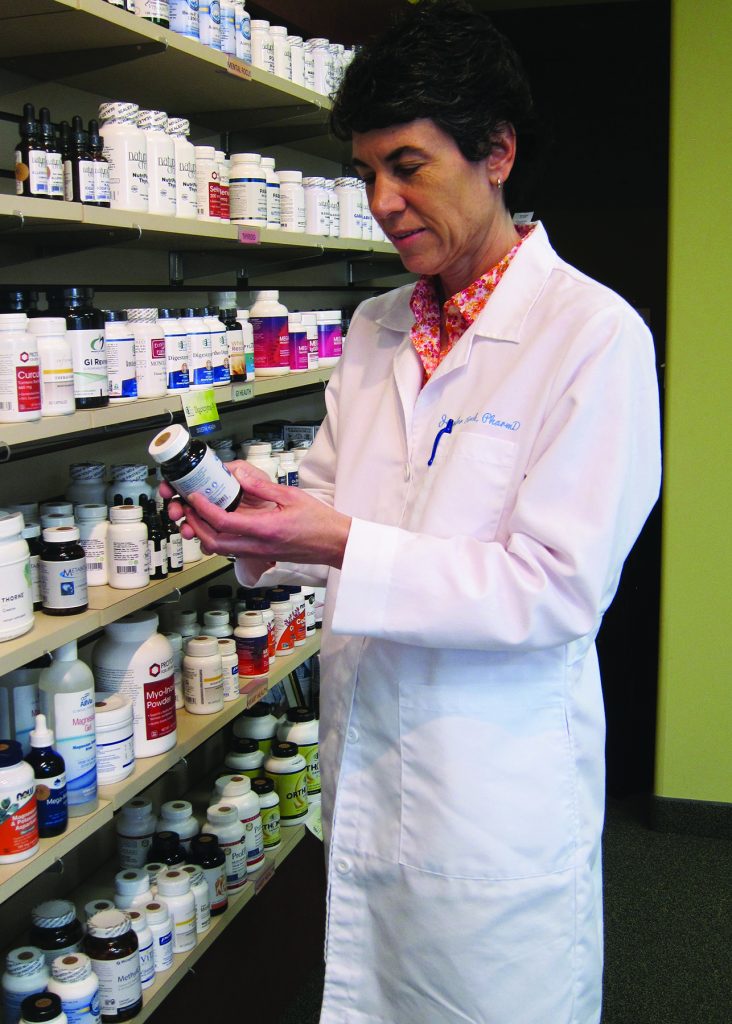
Do you wonder what supplements will help you sleep? Unsure about the safety of over-the-counter pain remedies? Confused about on-line interpretations of your symptoms? Overwhelmed by social media ads for supplements and remedies promising optimal health?
“You have good reason to be confused,” observes pharmacist Jennifer Burch of Central Compounding Center in Durham. “The Internet-driven world we inhabit is an incredible resource for the person seeking better understanding of health care options, medications, therapies, and over-the-counter remedies. However, (and this is a big ‘however’) at its best, on-line medical advice is a confusing source of information overload; at its worst, it’s a potentially harmful medical advisor. Making sense of the information, distinguishing between myth and fact, and figuring out how the advice applies to you—personally—can be a monumental challenge.”
Let Your Pharmacist Be Your Guide
“Pharmacists are the most over-educated and underutilized health care professionals in America,” asserts Dr. Burch. “And this is regrettable, because they can be an invaluable resource.”
Pharmacists, she points out, “are the best trained health care professionals in drug therapy management—and are therefore perfectly positioned to help patients with questions related to over-the-counter (OTC) drugs, either alone, or in combination with other medications.”
This is especially important for patients who are taking 15 or 20 different prescription drugs. “Amazingly,” notes Dr. Burch, “that kind of a medication load is not uncommon. And figuring out what OTC medications such patients can use becomes both complex and highly personal. But whether you take one prescription medication or twenty, when it comes to taking OTC products into your body, the very best practice is to first check with your pharmacist.”
Hormone Replacement? Pain Management?
Understanding Your Options
Health&Healing: What are the most common issues raised by your clients, and how do you respond to them?
DR. BURCH: People have questions about everything from dosage and effectiveness of vitamins and other supplements to options for dealing with sleep problems. But the two areas that require more comprehensive counseling are hormone replacement therapy (HRT) and the use of CBD products for pain management and other issues.
HRT has been used for decades to alleviate symptoms of menopause and other hormone-related conditions. But, more recently, there is growing understanding of the role it can play in maintaining health as we age. That’s because hormones affect every cell in the body, working together to help regulate all the body’s processes. An imbalance—too much or not enough of one or more hormones—can cause a variety of problems. So, the number of people considering HRT and seeking guidance has grown significantly.
But, while HRT can play a critical role in addressing hormonal imbalances, it’s a complex and highly individualized therapy—precisely what compounding pharmacies are designed to provide. Which is why it’s a major focus of the work we do at Central Compounding Center.
Hormonal imbalances are extremely complex conditions, in which a variety of factors contribute to a patient’s symptoms. This can be confusing, as similar symptoms can be caused by different hormones—one might be too low, another might be too high. So, teasing out the precise nature of the imbalance—and its cause—is essential.
Hormone testing is the starting place. Comprehensive testing and monitoring—for each individual—is essential, because it allows for accurate hormone adjustments. But the numbers alone don’t tell the whole story; the context is just as important. So, counseling that takes into consideration other health issues, other medications, and lifestyle factors is important to accurately interpret the test results. Then, working with your physician you can adjust hormone levels as need to achieve balance—balance for you.
H&H: How do you advise patients on the use of CBD products?
DR. BURCH: Prescription medications are, of course, the primary focus of our work at Central Compounding, but pharmaceutical work more broadly is about drug therapy management, including non-prescription options for treating medical conditions. So, the approval in 2014 of cannabidiol (CBD) for over-the-counter sale in North Carolina, presented an important and interesting challenge.
At that time, CBD was widely used as an alternative, non-pharmaceutical treatment for pain and many other conditions, but how to use it effectively was less clear. So, I became a dedicated student of CBD. And while I do not prescribe CBD treatments (or any medications), I’ve come to understand its properties and uses and to be able to advise clients about using it effectively.
Many people are familiar with CBD use as an option for pain management but may not appreciate how broadly it can be used. This is because the body’s endocannabinoid system plays a number of stabilizing roles, with hundreds of receptors throughout the body. And while researchers continue to learn more about this system, they do know it plays a role in regulating sleep, mood, appetite, memory, even fertility.
It is effective for all kinds of pain: musculoskeletal, neuropathic, even vaginal pain; it’s a proven treatment for epilepsy; and one of my patients even found that the right dose of CBD calmed her restless leg syndrome.
CBD also helps with a range of mood disorders, including anxiety, panic, and PTSD. And I have found it particularly useful for patients who are on medications for anxiety, which when taken long-term is a concern. And we’ve found that the right dosage of CBD can help such patients lower their usage of other medications or even to help them get off other anxiety medications entirely.
The “right” dosage is key. In our experience with CBD, we’ve learned the importance of careful, individualized dosing. And we work closely with our patients to find the “sweet spot” that produces the desired result. More is not necessarily better with CBD. We start everyone on a lower dose and teach them how to titrate until they get the appropriate effect.
Just as important as the dosage is the quality of the product. The hemp plant—which is the source of CBD—is much like a sponge. So, you don’t want to use CBD from hemp planted in toxic soil. We carefully vet all products to ensure they have the appropriate level of CBD and are not contaminated with pesticides, herbicides, or heavy metals.
Drug Interactions, Polypharmacy
H&H: What are your concerns about patients taking multiple medications?
DR. BURCH: Among the most important counseling roles we have is to evaluate the impact of taking multiple medications. It’s known as polypharmacy, and is a serious problem. People often slide into this place. They’ll take a medication for a chronic health condition and may then add another to counter a side effect of the first medication, and then another for a different problem, and a side-effect canceling medication for that. And, ultimately, they’re on 10 to 15 different meds, and probably taking supplements and OTC remedies as well.
When counseling these patients, we’re looking for interactions that might be harmful, or cause additional irritating side effects. We’re also considering whether one medication might reduce the effectiveness of another. Or a drug prescribed five years ago may need adjustment, reduction, or even elimination.
And we’re particularly attentive to the impact of OTC medications on the mix. For example, in any drug store there are shelves of products labeled “cold medication” and described as treating specific symptoms. So it’s not uncommon that a client will come in who is taking Tylenol in two or three different things—unwittingly overdosing on Tylenol and possibly doing some liver damage.
Comprehensive Counseling Sessions
H&H: The pharmacist’s advisory role appears to be an important focus of Central Compounding Center.
DR. BURCH: Absolutely. It’s especially important when it comes to compounded medications. Because each prescription we fill is designed for a specific, individual patient—the result of a collaborative process involving patient, physician, and pharmacist.
In that process, we work closely with practitioners to help “design” each prescription, often suggesting precise options and alterations to meet a specific patient’s needs. And we spend time counseling the patient on their medicine’s use. We’ll answer questions about the medication, about drug interactions, and seek feedback on its effects. Compliance is important, so we’ll often share feedback with physicians who want to know how the medications are used before refilling or adjusting prescriptions.
Beyond that, we also offer comprehensive counseling sessions for patients wanting to evaluate the medications and over-the-counter products they are taking, to explore non-prescription options, such as CBD products, and more. These counseling sessions are especially valuable for those taking multiple prescription medications and for those considering hormone replacement therapy. HRT is complex, so testing is just the first step in designing an appropriate therapy. It’s not enough to simply get hormone levels; we need to look at those numbers in context—considering other medications and supplements, other health issues, health history, and lifestyle issues including diet and exercise. Patients can share the information from these consultations with their health care providers, who will work with us to write the requested prescriptions.