TMJ & Sleep Therapy Centre of Raleigh-Durham
For more information, contact:
Charles Ferzli, DDS, FAACP, DABCP, DABCDSM, DABDSM
TMJ & SLEEP THERAPY CENTRE OF RALEIGH-DURHAM
1150 NW Maynard Road, Suite 140
Cary, NC 27513
Telephone: (919) 323-4242
RaleighTMJandSleep@gmail.com
https://RaleighTMJandSleep.com
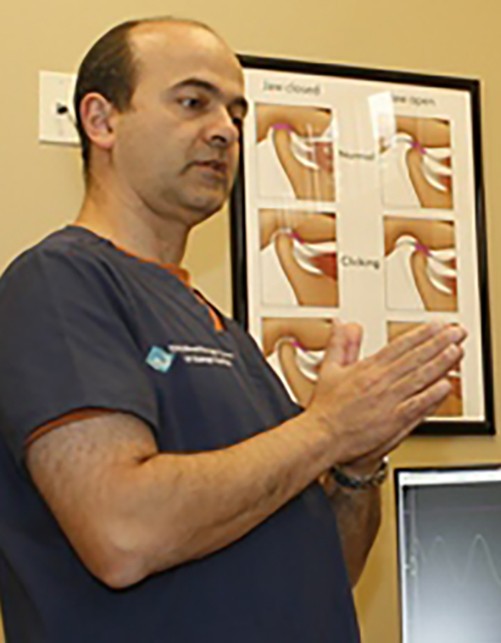
“What people don’t often appreciate,” observes Dr. Charles Ferzli, “is that the challenge of diagnosing a problem is not merely to name it, but to identify its source. This is especially true for the patients I treat. Because labels don’t tell the whole story. Symptoms alone are deceptive and, in the case of jaw pain and sleep problems, can lead one far from the source of the problem.”
The majority of the patients Dr. Ferzli sees in his practice, the TMJ & Sleep Therapy Centre in Cary, are dealing with chronic problems. “TMJ and sleep problems,” he notes, “typically develop slowly and then seem to happen all at once—producing acute symptoms. But a sudden severe pain or locked jaw is likely a symptom of a problem that has been building for a long time. This is because TMJ and sleep disorders are complex health issues, caused by multiple factors, and with misleading symptoms. Furthermore, they’re usually connected.”
The Right Label Is Just the Start
“TMJD (temporomandibular joint disorder),” observes Dr. Ferzli, “is perhaps one of the best examples of the challenge of accurate diagnosis. It has been called ‘the great imposter’ because its symptoms are so often the same as those for many other disorders, including headaches, facial and eye pain, neck, shoulder and back pain, sinus congestion, or tinnitus—ringing in the ears.
“For these reasons, most of my patients come to me after having been to many different practitioners and after many different tests—and they are still in pain. An accurate diagnosis is essential; but it’s just the start. Our job is to find the sources of their pain.
Healing Begins with Comprehensive Testing
Healing, says Dr. Ferzli, begins with a detailed process to determine the root cause—or, more likely, causes—of the patient’s problem. “Our goal,” he says, “is to determine the sources of the pain and then to design a treatment plan.”
Step one in that process is to rule out certain organic causes, such as a tumor. The next step is comprehensive, using an array of state-of-the-art tools to determine the sources of pain and inflammation, including:
- A detailed questionnaire identifying health and lifestyle factors contributing to the problem
- A sleep study, in many cases
- CBCT X-rays: to determine jaw joint health, airway and areas of obstruction, neck analysis, cancer screening.
- Motor Nerve Reflex Test, to assess the patient’s autonomic system.
- Photography: to examine body posture and misalignment.
- Joint vibrational analysis: to help determine health of the TMJ joint when the patient opens & closes their mouth.
- Jaw tracker: an instrument that measures and records the movement of a patient’s jaw, used to determine how fast the jaw opens and closes—and how straight the mouth is when opening and closing.
“TMJ problems may be caused by jaw injuries, teeth grinding, arthritis, and everyday wear and tear,” explains Dr. Ferzli. “But there’s rarely a single cause. Rather, a combination of factors contributes to the disorder. And, since TMJD is an inflammatory condition, anything that contributes to inflammation can play a role, including diet and emotional and psychological stress. Stress may cause clenching or breathing problems; food sensitivities cause nasal inflammation, which leads to breathing problems, and thus to TMJ. In fact, the typical American diet, which is highly inflammatory, contributes to a large percentage sleep and breathing issues.
“Breathing issues are one of the most significant—and least appreciated—problems that we see,” notes Dr. Ferzli, “which illustrates both the complexity of TMJ and the importance of testing. Breathing issues—especially mouth breathing—contribute to jaw joint problems; jaw joint problems interfere with sleep by obstructing airways. As a consequence, we’re not getting enough oxygen, sleep is interrupted, and we wake up hurting and tired. The breathing issues cause clenching, which further exacerbates the jaw joint problems. It’s a vicious cycle.”
Seeking the Source of
TMJD and Sleep Issues
“There’s a good reason my practice is called the TMJ and Sleep Therapy Centre,” notes Dr. Ferzli with a smile. “In treating the vast majority of TMJD cases, we discover that there are also sleep issues, even in people who don’t think they have them.
“When seeking the source of TMJ problems, we need to dig deeper still,” says Dr. Ferzli. “And, in my experience, systemic inflammation is the most common cause of sleep issues and pain. Inflammation elevates cortisol levels, which can interfere with the ability to fall asleep easily. Diet, allergies, environmental factors, and poor sleep hygiene can all contribute to increased cortisol levels. And lack of proper nasal breathing also promotes inflammation in the body.
“Again and again,” he observes, “we see power of these connections. What’s equally important is to understand that healing is also multi-factorial. Improved sleep helps jaw pain; diet adjustments help reduce inflammation; oral appliances can relieve pain and improve sleep. Our goal is to design the right combination of changes and therapies to set each patient on a permanent healing path.”
The Challenge of Misdiagnosis
“Because symptoms associated with TMJD may indicate different health problems, misdiagnosis is a common problem,” says Dr. Ferzli. “And it too often results in a long road to healing, as patients go from one practitioner to another, seeking symptom relief.
“Additionally, it’s not uncommon for patients to receive what I would call an ‘incomplete diagnosis,’ and to be treated for half the problem. They may be diagnosed and treated for sleep apnea, for example, but not for the structural problems or breathing issues that produce sleep apnea. Similarly, treatments for TMJD may ignore sleep problems that are so frequently also present.
“An all-too common—and serious—example of misdiagnosis is when children are treated for ADHD (attention-deficit/hyperactivity disorder) because they’re not sleeping well,” says Dr. Ferzli. “When a child doesn’t sleep well, they’re hyperactive during the day; they don’t pay attention in class; and are considered to have poor attention. So, they’re diagnosed as having ADD or ADHD and are treated for that instead of getting treatment for sleep problems. They’re given stimulants, but no one is evaluating their sleep.
“For many children, symptoms attributed to ADHD may be caused by quite different health issues that interfere with healthy sleep,” he says. “Often, the cause of poor sleep in children is a breathing problem, perhaps the result of an allergy, or a diet that causes congestion, by enlarged tonsils or adenoids, or maybe a structural problem. These conditions can result in mouth breathing during sleep, which interferes with growth and cognitive development. Poor sleep will result in more inflammation, fatigue and poor attention during the day.
“While these are also symptoms of ADHD, it’s important that breathing and sleep issues be considered in any such diagnosis. Children need to sleep at least 10 hours a night to grow and develop properly, so any issues that interfere with healthy sleep are serious health problems. The American Academy of Pediatrics advises that every child who snores should be evaluated for airway problems. Lifestyle issues also need evaluation—especially the ubiquitous electronic devices whose blue light can seriously impair sleep.”
A Tale of Two Patients
The challenge of accurately diagnosing TMJ problems, says Dr. Ferzli, “is illustrated by two patients I saw just this week. The first, who I’ll call Sue, is a classic example of what I would describe as an ‘incomplete’ diagnosis. She had been treated with a nightguard for some years for TMJD, but didn’t get better. Unfortunately, her initial diagnosis missed the airway problem that was contributing to her TMJ problem.
“Initial testing revealed those breathing issues, as well as serious neck tension, and neck pain, and the fact that she’s severely tongue tied. None of these issues was reflected in her previous diagnosis and treatment. Releasing the tongue tie will ease a lot of her neck problems, because the tension she has from swallowing causes recruitment of muscles of the neck and jaw—all of which contributes to jaw pain.
“Inflammation—due in part to food sensitivities—is also an issue for Sue. Inflammation contributes to congestion, affecting the airway, and again impairing sleep. And impaired sleep exacerbates her TMJ problems. It’s all connected.
“Sue’s case illustrates the problem of a diagnosis that ignores those connections. You can’t effectively treat TMJD pain without fully understanding the multiple causes and contributing factors. Her treatment plan will need to address her tongue tie, her breathing and sleep issues, and the inflammatory issues that contribute to those problems.”
Lisa is another example of a patient with diagnostic challenges. Like many of Dr. Ferzli’s patients, Lisa came to him after exploring other options and unsuccessful treatments. Her problem began when she noticed clicking and pain in the left side of her jaw, and over time it got to the point where she couldn’t open her jaw. Her dentist fitted her with an oral appliance, but when that didn’t help, referred her to Dr. Ferzli.
“In Lisa’s case,” says Dr. Ferzli, “the TMJ problems, while treatable, were related to other health issues that required treatment beyond her jaw problems. Initial tests revealed significant alignment and balance issues, which certainly were contributing to her jaw problems. And, for this reason, we referred her to a physical therapist for complementary therapy.
“But the first step was to provide immediate relief from pain and to position her jaw to permit healing. She was fitted with oral appliances that she wears 24/7. If someone has a chronically inflamed jaw joint,” he explains, “we want to brace that joint so it can heal. So we use oral appliances to position the jaw joint orthopedically, which decreases inflammation. The daytime appliance fits over the lower teeth and allows her to speak and eat with it in place. For nighttime, you have to design it differently because the head is in a different position when you sleep and the jaw needs to be positioned to keep the joint orthopedically stable.
“Typically—and in Lisa’s case—we have patients wear these appliances 24 hours a day for 10 to 12 weeks. After that, only the nighttime appliance is needed. This approach was successful in realigning Lisa’s jaw, significantly reducing her jaw pain, and allowing her to open her mouth normally. However, her neck pain still continued, and physical therapy was not helping. So, her physical therapist referred her to an orthopaedist, which I supported, as it appeared to me that the source of the pain was nerve related.
“And, in fact, that is what she discovered. An MRI revealed that she has degenerative disc disease in her neck, pinching a nerve. She’s currently considering options for resolving that problem. But the treatment here continues to be important, and we want her to keep the nighttime oral appliance in place to speed up healing and until we know that her nervous system is responding more favorably.” Lisa’s case, notes Dr. Ferzli, “underscores the importance of a diagnosis that is comprehensive—taking into account all the possible causes of jaw problems. The complementary therapies she’s getting—working with us and her orthopaedist, are frequently necessary for patients dealing with complex TMJD and sleep issues.