RAISING HEALTHY CHILDREN
Educators from Carolina Friends School in Durham explore the relationship between health and education.
Contact the school at:
CAROLINA FRIENDS SCHOOL
4809 Friends School Road
Durham, NC 27705
Telephone: (919) 383-6602
www.cfsnc.org
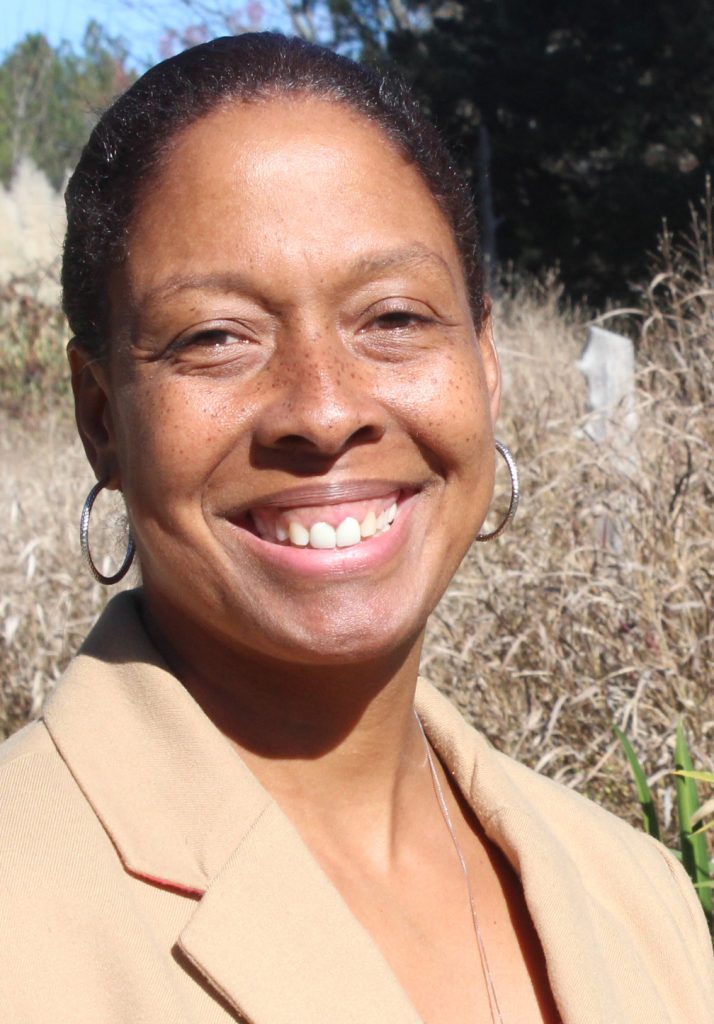
Karen Cumberbatch is the Head of School at Carolina Friends School. She has a 30-year career in independent school administration including 28 years in Quaker schools. Most recently, she came to CFS from Sandy Spring Friends School, where she was Head of Upper School.
Beyond her teaching and administrative experience, Karen has led school-wide strategic planning and implementation, clerked numerous school committees, and organized and developed a wide range of student leadership and staff professional development initiatives.
Karen grew up in Jamaica, New York in a family deeply committed to education. She received her BA in Africana Studies from Cornell University, and an MA in Afro-American Studies from UCLA. She also earned a Graduate Certificate in Independent School Leadership from Johns Hopkins University and completed the Institute for Engaging Leadership with the Friends Council on Education. Karen is also a CFS parent.
This column by Carolina Friends School head Karen Cumberbatch originally ran in 2018. But its message is worth repeating. From mass shootings to angry rhetoric on social media, violence is a pervasive toxin in today’s world. Helping our children cope with violence in all its forms is a critically important health issue.
By Karen Cumberbatch, MA
The shootings this fall in Pittsburgh and Louisville were the latest reminders that hatred and bias are at work around us. In the wake of these events, it can be difficult to know how to process acts of violence such as these with our children. It is devastating to know that so many innocent people have lost their lives to senseless acts of violence.
As parents and caregivers, we have to find the words to help our children cope with tragedy. In the year and a half since I joined the Carolina Friends School (CFS) community, there have been three times that I have needed to share resources on how to talk to children about violence and mass shootings. That’s far too frequently to truly comprehend.
The most important thing to remember is that you need to respond in the way that is most developmentally appropriate for your child. Our youngest children should be shielded completely from these kinds of acts of violence. Keep them away from media detailing the incidents. For older children, talk with them honestly, allowing them to express their feelings, share your thoughts on the situation, and remind them that you are there to support them. Monitor their emotional state carefully and respond to their emerging needs. The full impact may not be apparent immediately. Finally, try to maintain a normal schedule. This consistency can be reassuring.
The acts committed in a 72-hour period in late October are even more devastating because they were committed by men motivated by deeply entrenched hate. As a country, we have seen a rise in public instances of intolerance and prejudice. At CFS, we have been and continue to work to combat this upsurge by confronting instances of bias on campus and teaching our children how to resolve conflict and appreciate the diversity of our community and our world.
The good news is that our children, Generation Z, are the most unbiased generation yet. As a group, they are the most diverse in our nation’s history. They are more likely to have friends with identities different from their own. Unlike previous generations, for them, interacting with peers from a variety of cultures, lifestyles, and beliefs is the norm. This ease in connecting with others has profoundly impacted their attitudes and behaviors for the better. They are more likely to be interested and active in combating prejudice and intolerance.
As we consider these most recent demonstrations of hate, it is striking to note that they were committed by men from earlier generations—less diverse generations, more biased generations. As we continue to focus on how to help our children become even more appreciative of the gifts, accomplishments, and value of being such a diverse nation, I am reminded that we, the adults, have to confront our own prejudices and model the behavior we hope to see in them.
We know that the inequity of the systems around us requires persistent attention on how we can impact our community for the better. I ask of myself the same questions we ask of our children: Have we examined the ways in which we may exhibit bias, implicitly or explicitly? Do we demonstrate appreciation for those of other backgrounds by consistently interacting with individuals with identities different from our own? Do we talk about diversity issues with our peers? Do we model behaviors that deescalate conflict of all kinds—racial/ethnic, religious, political, etc.? After asking myself these questions, I know I can do more and plan on redoubling my efforts to be better. As you ask yourself these questions, do you see opportunities to do the same? I am sure that we can all demonstrate more anti-bias behavior and I hope that we will commit to doing so. Our children have already made this critical shift. As we strive to be better examples for and partners with our children in this work, let’s support each other, be accountable to each other, and hold each other in the light.