Southern Dermatology & Skin Cancer Center
For more information about skin conditions and their treatment, contact:
SOUTHERN DERMATOLOGY and SKIN CANCER CENTER
An Affiliate of Anne Arundel Dermatology
Gregory J. Wilmoth, MD
Eric D. Challgren, MD
Margaret B. Boyse, MD
Laura D. Briley, MD
Tracey Cloninger, PA-C
Stephanie S. Pascale, MSN, FNP-C
Madelyn Pence PA-C
Cheryl Jones PA-C
Shelby Hayslip PA-C
4201 Lake Boone Trail, Suite 200
Raleigh, NC 27607
Telephone: (919) 782-2152
THE SKIN RENEWAL CENTER AT SOUTHERN DERMATOLOGY
4201 Lake Boone Trail, Suite 207
Raleigh, NC 27607
Telephone: (919) 863-0073
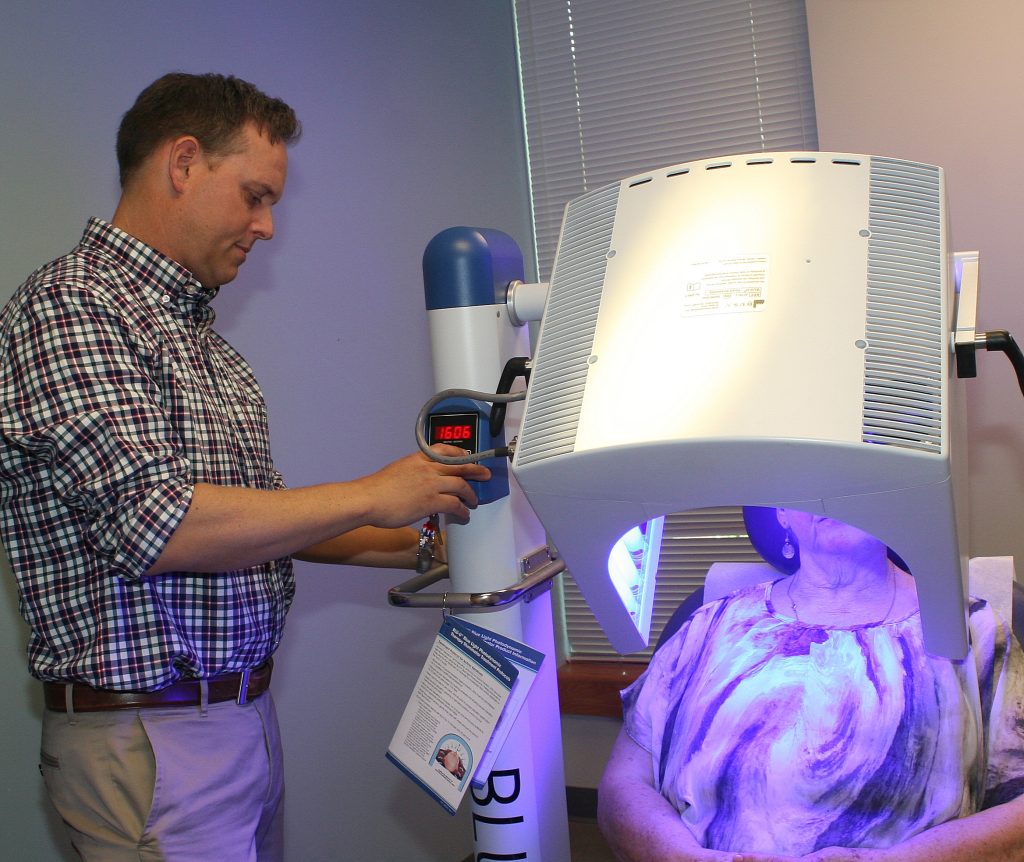
When it comes to skin health, the toxic world we live in is both internal and external, observes dermatologist Dr. Eric Challgren, of Southern Dermatology and Skin Cancer Center in Raleigh. “The skin is the body’s shield to the world around it,” he explains, “and it is under constant assault from a multitude of environmental products and events. At the same time, internal factors—such as stress, inflammation, or allergies—can have a huge impact on our skin as well as its effectiveness in protecting us from external toxins.
“Pollution is a real issue, especially in an increasingly urban area like ours,” he says. “As populations increase, so do many pollutants—from vehicle exhaust, ozone depletion, microplastics, and PCBs. And, in our practice, we see every day the impact of this pollution in the increased incidence of skin diseases such as acne, atopic dermatitis, and eczema.
“Allergies and sensitivities have also been on the rise,” notes Dr. Challgren, “resulting in what some have described as an epidemic of contact dermatitis because we’re exposed to so many more irritants.”
Toxic Threats We Can Control:
Sun, Stress, Smoking
Many of the pollutants in our lives are hard to avoid, acknowledges Dr. Challgren. “But the toxins posing the most serious threats to our health, and especially our skin—sun, stress, smoking—are threats we can control.
“And I would argue that the most potent of these threats is the sun— ultraviolet (UV) radiation. That’s ironic, as sunlight is important to our health in many ways. But long-term, unprotected exposure to UV radiation is toxic. UV rays destroy collagen and thin the skin, degrading its texture and eroding its elasticity. In fact, much of the skin damage we attribute to aging—wrinkling, discoloration, and other problems—is the result of chronic UV exposure. And, while the cosmetic damage is problematic, the more serious problem is that over-exposure to the sun causes skin cancer.
“And there’s no question that we’re seeing increasing amounts of skin cancer,” says Dr. Challgren; “You could describe it as an epidemic. The data are pretty stark. All forms of skin cancer have been on the rise in recent decades, and people in their 60s and 70s are now five times more likely to be diagnosed with malignant melanoma—the deadliest type of skin cancer—than their parents would have been 30 years ago. That’s not surprising; all too many of the Baby Boom generation experienced years of UV exposure without protection.”
Stress and Smoking:
Powerful Internal Toxins
“The unwritten rule in dermatology,” says Dr. Challgren, “is that 10 percent of all cases have some underlying toxic psychological component, such as anxiety, depression, or high levels of stress—and stress is what can be considered an internal toxin. Such stress doesn’t necessarily cause illness, but can exacerbate a problem and can certainly trigger symptoms. This is something we see regularly in our acne, eczema, and psoriasis patients.
“As for smoking,” says Dr. Challgren, “this habit is an assault on every cell in the body, and is toxic to all aspects of our health, including skin health. In fact, only the sun is more damaging to the skin. Not only does smoking accelerate skin damage associated with age, but it increases the severity of many skin diseases, including psoriasis. And, when combined with chronic sun exposure, it’s a recipe for disaster.”
And, he adds, “it’s worth mentioning that smoking’s toxicity goes beyond its impact on the smoker. Second-hand smoke is harmful to those in a smoker’s proximity, but even smoking residue—known as “third-hand smoke”—is also unhealthy. That toxic residue that finds its way into a smoker’s environment, including upholstery, carpeting, even clothing; and its impact can last for years.”
Responding to Our Toxic World
“The good news,” says Dr. Challgren, “is that we’ve seen extraordinary advances in treatment for the diseases and conditions caused and exacerbated by the toxins in our environment—from eczema to photo-aging to cancer. That said, the most powerful response—especially with regard to sun, smoking, and stress—is prevention.
“Preventing sun damage is the most important thing you can do for overall skin health, so using sun protection is basic, and it’s never too late to start using it. The most important advice I can offer to anyone is to eliminate tobacco, to take steps to reduce stress, to use sunscreen and—especially as you get older—to get regular skin exams. These very simple habits have a huge impact and may be life-saving.”
Preventing harm from external pollution is a tougher challenge, acknowledges Dr. Challgren. “We live in an increasingly urbanized area, and increased pollution comes with the growing population. New, less well understood toxins, such as microplastics, are increasing as well. And the growing list of chemicals that come with cleaning and self-care products pose additional risks for skin health.
“That said, the development of biologic medications over the past two decades has been revolutionary, dramatically improving our ability to treat the diseases—such as psoriasis and eczema—that are impacted by the toxins in our environment. And new biologic drugs continue to come out every year, giving even more opportunity for patient-specific treatment in a way that was simply not possible with the older meds.”
Skin Cancer: Early Detection is Key
“Given the dramatic increase in skin cancers—especially among our older patients—it’s really hard to overstate the importance of early detection and treatment,” observes Dr. Challgren. “Because, when caught early, skin cancers—even melanoma—are highly treatable, with survival rates higher than 95 percent; but when left untreated they are serious, even life-threatening health problems.
“Basal and squamous cell cancers, for example, are virtually 100 percent curable if found early. And, in many cases, can be completely removed with the initial biopsy procedure alone. But don’t assume they aren’t dangerous. Left untreated, they can be life threatening, and, at the very least, delayed treatment significantly increases risks and costs.
“And, although melanoma causes the majority of deaths from skin cancer, it also is highly treatable when caught early—when it is localized and has not spread,” says Dr. Challgren. “Also, thanks to significant advances in treatments the prognosis for melanoma—even in advanced stages—is much improved; but early detection is still extremely important.”
Skin cancer’s connection to sun exposure is inescapable, notes the doctor. “Precancerous lesions, or actinic keratoses, are probably the most common skin problem we see, especially in the 60-plus population. And the most common sites for these pre-cancers are the head and neck, followed by the hands, forearms, and lower legs—the areas with the most sun-exposure.
“But the challenge of early detection is a diagnostic one. In early stages, cancers are small, and signs and symptoms are often not obvious. They can be as simple as a change in the color or symmetry of a mole; and they can be misleading. “There are useful guides to identifying potential cancers,” says Dr. Challgren, “and—perhaps in the future—AI advances will add to our ability to detect cancers in earliest stages. But the two things that we find most useful are regular skin checks and patients’ own observations—their awareness of the risks and of changes in their own bodies.”