Chapel Hill Compounding
For more information, contact:
CHAPEL HILL COMPOUNDING
Zoe Stefanadis, RPh/Owner
105 Conner Drive
Wilshire I building, Suite 1200
Chapel Hill, NC 27514
Telephone: (919) 967-8805
Fax: (919) 967-8205
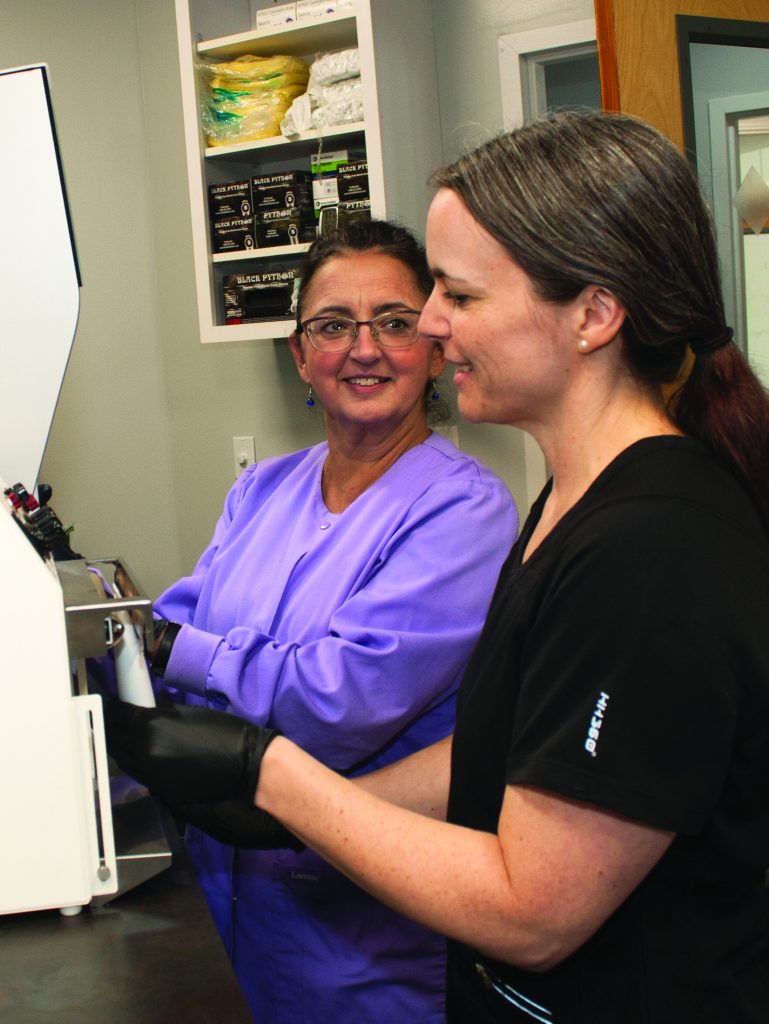
One rarely considers the possibility of ingesting toxins with a daily prescription, but it is not an unlikely hazard, notes pharmacist Zoe Stefanadis, owner of Chapel Hill Compounding Pharmacy. “Medications—both over-the-counter and prescription medicines—can be toxic. Because we all respond uniquely to the things we’re exposed to and to the things we ingest. And for many people, the medications that are meant to heal are actually toxic.
“This is true of people who have Celiac disease (gluten sensitivity), asthma or severe allergies, or who have skin sensitivities,” explains Ms. Stefanadis. “Medications may also be toxic for those with autoimmune disorders, ADHD, and neurological sensitivities. This is because commercially available drugs often contain ingredients such as lactose, gluten, dyes, artificial colors, and preservatives that trigger allergies and sensitivities.
“Alpha-gal— a recently discovered food allergy to meat-based products—offers a good example, because those with this allergy react to magnesium stearate, common in many medications, and to gelatin capsules (see box). We regularly compound magnesium stearate-free medicines or use vegetable capsules to address that problem.”
Compounding: Medicines for Individual Patients
Alpha-Gal:
A Growing Health Threat from an Unexpected Allergen
For many suffering from Alpha-Gal Syndrome (AGS), it arrives as a complete surprise. It is conveyed by a tick bite, and the first signs can be as simple as mild flu-like symptoms or as life-threatening anaphylactic shock.
AGS is also called alpha-gal allergy, red meat allergy, or tick bite meat allergy, because it causes sensitivity to meat and other products made from mammals. “Alpha-gal” is an abbreviation for a type of sugar molecule, galactose-α-1,3-galactose, found in most mammals, excluding humans, but not in fish, reptiles, or birds. The sugar molecule is acquired through a tick bite, and in some people it sets off an immune reaction.
Reactions vary significantly, and, although not all patients with AGS have reactions to every ingredient containing the alpha-gal molecule, for some the reaction can be extremely serious. The sensitivity extends to all mammalian meat (pork, beef, rabbit, lamb, etc.), as well as to products made from mammals, including gelatin, cow’s milk, and milk products.
AGS is a long-term condition for which there is no cure. And, although symptoms vary significantly and may lessen or resolve for some patients, reactions to alpha-gal are often severe and sometimes fatal. Symptoms can be immediate or delayed; furthermore, the triggers for an allergic reaction may not be obvious. Often, in fact, triggering sources are among the common ingredients in many medications.
“That is why,” explains Ms. Stefanadis, “this allergy is a significant pharmaceutical issue. Because many standard medications use ingredients derived from mammals. Magnesium stearate, for example, is a meat-derived additive commonly used in pharmaceuticals and dietary supplements as a filler or lubricant. Similarly, gelatin capsules—which are commonly used for dispensing medications—can be problematic because they are derived from beef or pork. For alpha-gal patients we regularly compound magnesium stearate-free medicines and substitute veggie caps, which are cellulose-based.”
“The alpha-gal allergy is just one example of a solution to the problem of toxic medicine,” says Ms. Stefanadis. “By compounding medications, we can offer alternative, safe options for patients with a wide variety of sensitivities.
“In fact, the preparation of individualized medications,” notes Ms. Stefanadis, “is at the heart of pharmaceutical compounding. Many years ago, before the advent of drug manufacturing on a mass scale, compounding of medications was the backbone of pharmacy practice.
“Today, we can compound almost anything: bio-identical hormone replacement therapy, veterinary medications, hospice medications, pediatric formulations, dental, dermatologic, chronic pain medications, medications for infertility, wound therapy, sports medicine, podiatry—and much more. Each prescription addresses the individual needs of the patient.
“And tailoring medications to individual needs goes well beyond addressing allergies and sensitivities,” says Ms. Stefanadis. “It can mean creating a more palatable medicine, one that avoids side effects, or one that delivers the drug more efficiently. We can change flavors, textures, and dosages, as well as finding better options for transmitting the drug more effectively.
“In many instances,” she adds, “we find that very precisely compounding medications, and tweaking these medications over time as necessary, makes a dramatic difference in the health and well-being for many patients. Sometimes simply altering a medication by micrograms or milligrams can have a major impact on effectiveness. No two patients are alike. The medication and receptor sites, and the metabolism and absorption rates of medications—all of these issues come into play. This is not one-size-fits-all pharmaceutical care.”
First, Public Health
Ms. Stefanadis received her pharmacy degree from UNC-Chapel Hill after first earning a degree in public health, also at the University of Tennessee, Knoxville.
“Actually, my public health work was a perfect introduction to compounding pharmacy,” she notes, “because I learned a lot about the problems and potential of medications. Sometimes we would have the right medication for a patient, but the wrong delivery system. At times there were physical barriers to overcome—such as the distance to the nearest pharmacy or physician. And there were other barriers: Is the patient able to swallow the medicine provided? Is their body able to effectively absorb the medication?” She did most of her public health work at the Upper Cumberland Regional HealthHealthkkkjjHea;tj Center, in rural Appalachia. “The experience convinced me that I wanted to work my entire professional life in health care, and pharmacy seemed like an excellent choice. I spent many happy hours of my childhood mixing every conceivable kind of concoction in my mother’s kitchen, which may partially explain why I find compounding so interesting and rewarding.”