Certified
Indoor Air, Inc.
For more information about indoor air quality and assessment, visit our website or contact us by phone, text, or email for a free clean air consultation:
CERTIFIED INDOOR AIR, INC.
OF THE TRIANGLE
Call or Text: (919) 525-6464
Raleigh, NC 27606
You’re plagued by unexplained symptoms. Fatigue and dizziness; brain fog, headaches, perhaps respiratory or digestive problems. Medical tests and therapies have been inconclusive, and the symptoms persist. But your doctor now suspects that the problem may be connected to environmental toxins—mold.
In such a case, an accurate diagnosis might require not medical detective work, but environmental detective work. “Because,” says William Dolch, “the source of your ailments may be your home.” Mr. Dolch is the founder and owner of Certified Indoor Air, Inc., of the Triangle, a company that provides comprehensive mold testing and air quality inspections in the Greater Triangle area.
“In fact,” says Mr. Dolch, “many of our clients come to us at the suggestion of their doctors, who are increasingly aware of the health impact of environmental toxins. But those toxins are present in many forms and sources—including in the foods we eat and in the air we breathe. So, doctors will often refer patients to us to determine if the toxic exposure is coming from their house, because we know specifically what to test for.
“A lot of the most common molds that are found in this area play themselves out in the upper respiratory tract,” says Mr. Dolch. “So, many people complain of sinus congestion, coughing or sneezing, breathing troubles, and asthma attacks; some report brain fog and skin issues. A very serious condition—CIRS (see box)—is caused by mold; but indoor toxins can also produce less obvious health problems.
Symptoms of CIRS
Chronic Inflammatory Response Syndrome (CIRS) is a condition with a wide range of symptoms which are triggered exposure to biotoxins—typically mold. Symptoms of CIRS are among the most useful signals that a home may be contaminated. So, if you or someone you live with experiences eight or more of these symptoms, get them checked out for CIRS.
- Fatigue
- Pain (increased, unusual), electrical sensation, tingling, numbness, tremors, tics, dizziness, atypical seizures
- Problems with memory, focus, concentration, finding words, confusion, disorientation
- Mood swings, loss of interest in activities, depression, anxiety
- Headaches, light sensitivity, blurred vision, red or teary eyes
- Sinus symptoms, metallic taste in the mouth
- Cough, shortness of breath, asthma
- Abdominal pain, diarrhea
- Frequent urination, excessive thirst, temperature regulation problems, appetite swings
- Weakness, joint aches, morning stiffness, muscle cramps, muscle aches
- Skin sensitivity, sweats, static electricity/shocks
For more information, go to www.survivingmold.com
“In our assessment process, we identify likely sources of toxic exposure and then collect samples for lab analysis. Those samples will tell us clearly which toxins are present, and in which locations. In the case of molds, the lab can not only identify the specific molds but can determine whether they are growing or dormant.
“That’s important,” emphasizes Mr. Dolch, “because most people don’t react to the mold spores themselves. But when a mold colony is living and growing, it’s also off-gassing—and that is what causes the allergic reaction.”
“I have to listen closely to my clients,” he adds. “We need to learn about symptoms and health issues they’re experiencing. That information tells us a lot about the potential contaminant we should be testing for.”
When to Test
Types of Mold
A number of molds are considered toxic to human beings,” says Mr. Dolch. “It’s impossible to identify most of these by appearance alone, which is why proper inspection, testing, and identification is so important.”
Two of the most dangerous molds are Stachybotrys—also referred to as “black mold”—and Chaetomium. Other toxin producing molds include Fusarium and Penicillium.
Two of the most common molds found in this region, says Mr. Dolch, are Aspergillus and Cladosporium. “When I find these, I’m not alarmed, but when I found them in high quantities, in high density, then we do have problems.
“The most problematic molds are the slow-growing mycotoxin-producing molds such as Stachybotrys. Too often, a major water event will occur and will be cleaned up. But small remaining or dried up mold colonies still have microbial fragments that will grow back, unexpectedly causing problems long after the water damage originally occurred.”
“The Environmental Protection Agency estimates that 50 percent of buildings have water damage significant enough to produce health problems—some very serious—from mold and bacteria growth in water-damaged buildings,” says Mr. Dolch. “However, most people are unaware of the toxins they’re exposed to in their own homes, and, in fact, it’s estimated that 74 percent of the population is not sensitive to these toxins; but for the 26 percent who do react, it’s a serious problem.”
Although routine testing for household toxins isn’t necessary. Mr. Dolch points to several instances when it makes sense to get an inspection. “A water damage event, such as flooding or burst pipes, should put you on the alert. But most important: listen to your body. Symptoms—especially unexplained symptoms—that persist and don’t respond to treatment and can’t be tracked down are the red flags. In such cases, talking with your health care provider is an important next step.
“But you can also do a simple, inexpensive test, to see if your house might be involved,” he adds. “Take a short ‘vacation’ from your home. A common experience of many of our clients was that they felt better when away from home and their symptoms returned when they crossed the threshold. That’s good information to share with your health care provider as they work to determine the cause of your symptoms.”
Comprehensive Detective Work
And it’s reasonable that people don’t automatically assume that they’re dealing with mold, notes Mr. Dolch. “That’s because indoor pollutants are often hidden. But, even if you can’t see it, that doesn’t mean you don’t have it. Mold is likely to be found—and to thrive—behind walls, in basements and crawlspaces, or ventilation ducts. The toxins produced by molds and other microbes are spread through the home ventilation system, posing an invisible but serious health hazard.
“What we do at Certified Indoor Air,” says Mr. Dolch, “is detailed detective work. Every evaluation is comprehensive—inside and out. Although 90 percent of our work is mold related, we also test for wide variety of toxins, including organic compounds and chemicals that can come from cleaning supplies or off-gassing from different kinds of building materials or furniture. In addition to mold, many people are sensitive to chemical odors or may react to bacteria, which harbor in the dust inside the home and circulate through the HVAC system.
“So, finding all contaminants is our first priority. And identifying the specific irritants is also critically important. Different toxins will produce similar symptoms, but treatment will likely be different for different sensitivities.
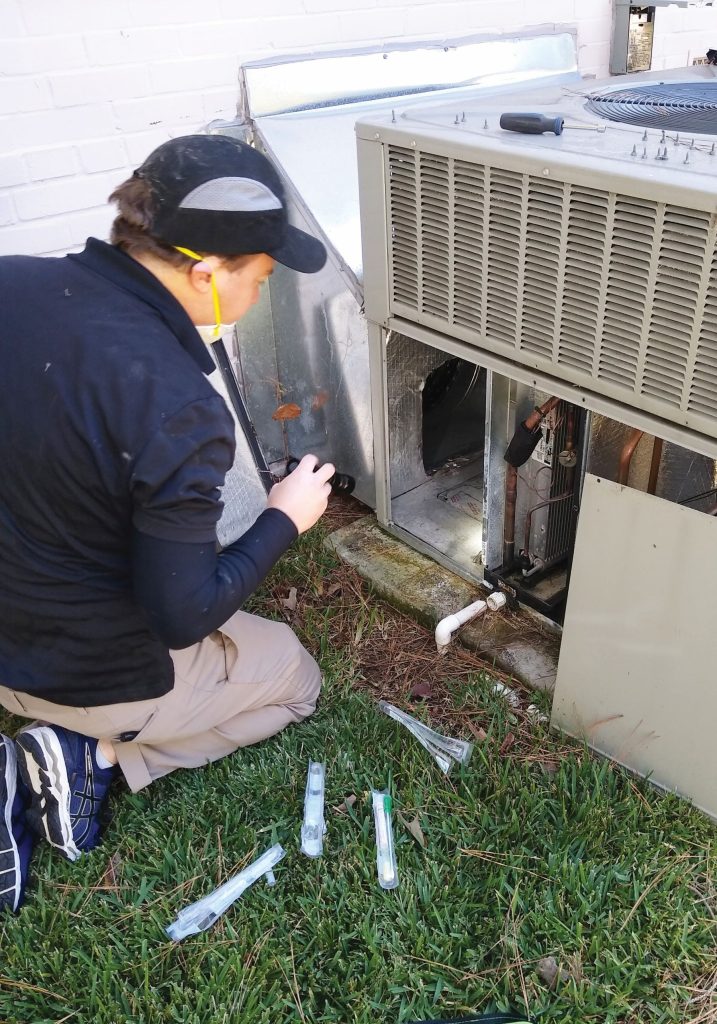
Home assessments, says Mr. Dolch, “involve careful examination of both the exterior and interior of a home as well as searching for signs of water infiltration, past and present water damage, and mold growth. Our list is a long one: we inspect attics, crawl spaces, ductwork, HVAC units, under sinks, behind appliances, and anywhere that water may have caused damage As a part of that process, we collect samples of dust to be analyzed for bacteria and specific species of mold.”
A good assessment, adds Mr. Dolch, includes a thorough understanding of the HVAC system and how it works. “The HVAC system is like the lungs of the house. It’s a critical piece to the puzzle, because it is often source of the passageways by which these toxins are spreading throughout the home.
“We also look for potential as well as current problems. For example, we examine the outer shell of the home—windows, siding, gutters, and downspout systems—for structural issues that may invite water damage in the future.”
The outcome of the assessment is a detailed phone call reviewing all findings and recommendations—from normal building maintenance to remediation. “We don’t do the remediation,” he explains, “but we provide all the information needed to ensure that problems can be remedied.”