Cynthia Gregg
Face & Body Specialists
For more information about the practice, contact:
CYNTHIA GREGG, MD, FACS
FACE & BODY SPECIALISTS
Cynthia Gregg, MD, FACS
3550 NW Cary Parkway
Suite 100
Cary, NC 27513
Telephone: (919) 297-0097
https://cynthiagreggmd.com
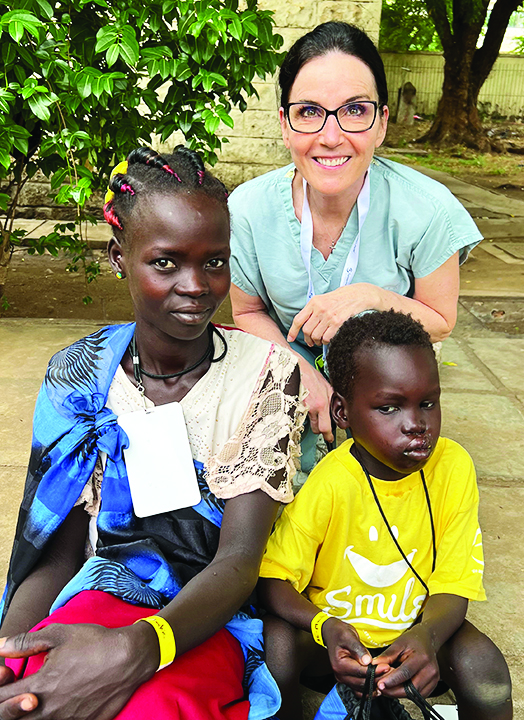
“There’s a kind of pain that’s elusive, harder to describe than the pain of a headache or broken bone,” observes Dr. Cynthia Gregg, one of the area’s pre-eminent facial plastic surgeons. “In fact, I hesitate to use the word ‘pain,’ because it’s not the right word. It’s more a sense of discomfort—of emotional unease. Although subtle, it can have a powerful effect on one’s health; and it’s a kind of pain I deal with all the time.
“In fact, I would say that most of the surgery we do addresses this emotional need,” she says. “I would describe it as the need to fix the disconnect between the way someone feels on the inside and the face they present to the world—the person that other people see. And it’s hard because we live in a world where people make judgments based on your outside and they’re not really seeing who you are.”
Most often, says Dr. Gregg, her patients come to her because that disconnect has gotten to the point where it’s causing emotional discomfort. “It might be simply that, because of the bags under their eyes, they look tired or angry or sad all the time,” she says. “Or the person they see in the mirror looks fifteen years older.”
And there may be external pressures that increase their discomfort. A child with protruding ears is likely to be teased; a colleague’s comments may increase self-consciousness; facial scars or a disfigured nose might become the way one is identified by others. In every case, the disconnect between the inner person and their external “face” is difficult and emotionally distressing.
Surgeries That Transform Lives
“I can say, without reservation, that my work is a constant source of joy,” says Dr. Gregg, “and I feel blessed to be doing it. That’s because every patient is not simply a surgical case, but a story—a story of someone we’ve helped to feel better about themselves and their place in the world.
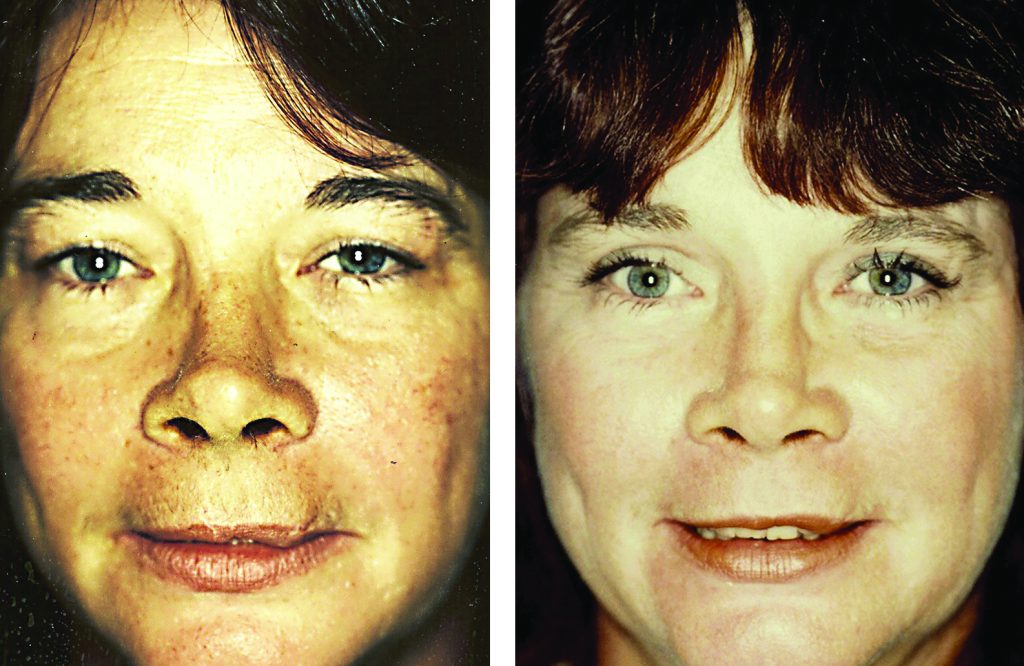
“Certainly, the most dramatic stories are the ones where we’ve removed scars they’ve suffered from domestic violence. I will never forget, for example, the young woman who had been beaten and scarred who came to me saying ‘I want you to take his hands off my face.’ Removing her facial scars was a relatively simple surgical procedure for me, but for her it was a lifechanging experience.
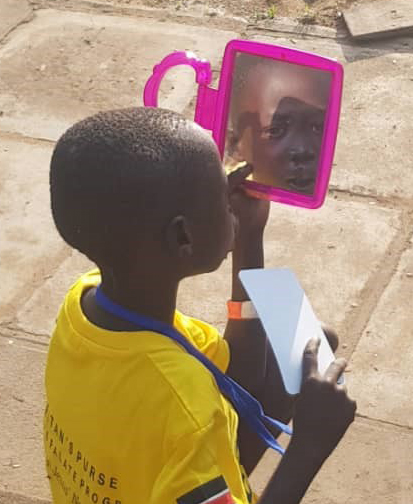
“And there are so many stories from my work repairing cleft lips and palates with Samaritan’s Purse in places such as South Sudan,” says Dr. Gregg. “Cleft lip or palate is one of the most common congenital abnormalities, and is easily addressed in our country. But in different parts of the world, where access to medical care is limited, a cleft lip means a label of ‘deformed,’ and condemnation to a lifetime of ostracization and limits to work and educational opportunities. So, the surgery we perform—again, a simple, routine procedure—is life changing.
“Many of the stories from my rhinoplasty and otoplasty patients are equally powerful,” says Dr. Gregg. “These are the cases where we’ve fixed a broken or disfigured nose or adjusted protruding ears, and thus relieved enormous emotional burdens.
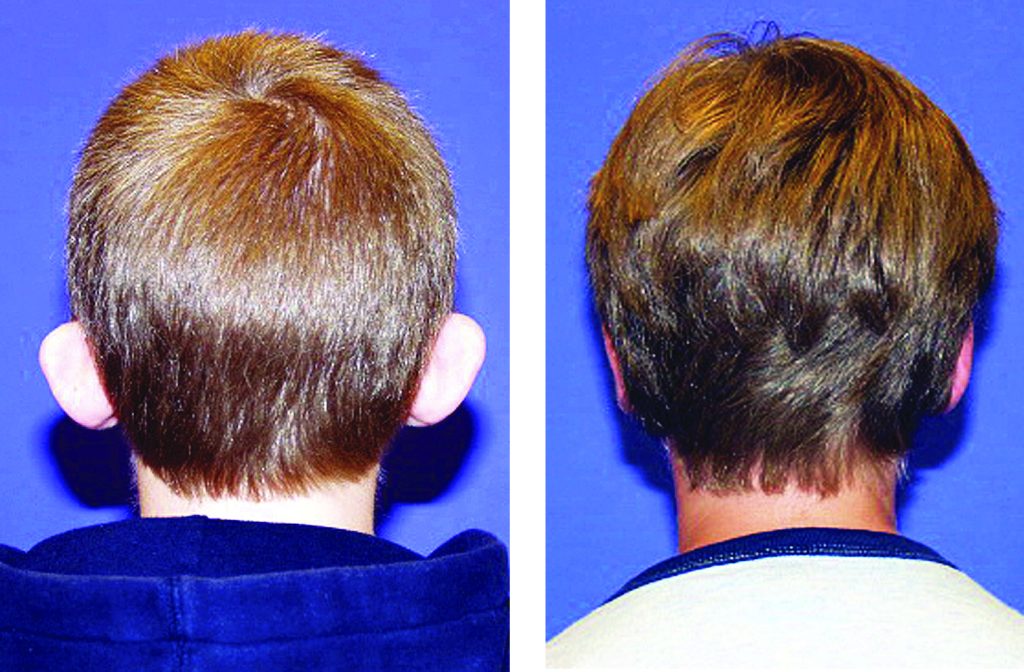
“Ear surgery (otoplasty) for a child’s protruding ears can prevent years—even a lifetime—of distress,” she notes, “as I learned from a 74-year-old patient. He had suffered self-consciousness all his life because of his outsized, protruding ears, and was elated by the change—even though it came late. ‘I should have done this years ago,’ he told me.”
Rhinoplasty, says Dr. Gregg, “is one of the most challenging procedures we do, because everyone’s nose is different, and because the goal is to have the nose look like the nose you were born with—even when it’s not. But it’s also one of the most rewarding surgeries I do. For some patients the goal is to repair a nose that’s been broken or disfigured, for others it’s to reduce their nose size or fix a congenital deformity. In most cases, the surgery heals on many levels, by fixing structural breathing problems. And in almost all cases, I hear that same response: ‘I should have done this years ago!’”
Small Changes, Big Impact
While the stories of her rhinoplasty and otoplasty patients are dramatic, Dr. Gregg notes that many, if not most, of her patients come to her for subtler changes. They want to repair the effects of aging or sun damage, and their basic message is: “I don’t look as good as I feel.” But, she emphasizes, “these changes are no less important—and no less emotionally charged—than removing a scar or changing a nose.”
Indeed, she says, “I’m often taken by surprise by the changes that have the largest impact on my patients—which underscores the very personal, emotional nature of these procedures. Even a small scar for a domestic violence survivor can be enormously important. And, just recently, after a simple upper eyelid lift, the patient said to me: ‘Thank you for changing my life.’ It was that important to him.
“In fact,” says Dr. Gregg, “probably one of the most common procedures that we do (because it’s the most commonly requested) is eyelid surgery, fixing the bags under the eyes. That’s because our eyes are the first thing people notice and it’s also the first place where we show age.”
The Right Time, the Right Reason
There is healing power in the surgery Dr. Gregg performs, but she would be the first to acknowledge that plastic surgery is not a remedy for emotional pain. “Realistic expectations are the very first part of any conversation I have with patients when consulting about a rhinoplasty—or any cosmetic procedure,” says Dr. Gregg, “because I know that there are emotional/mental issues that cannot be fixed by changing a physical attribute. So, we have to say ‘no’ to some patients.
“The surgery I do is about helping people look as good on the outside as they feel on the inside. But if they feel lousy on the inside, no matter what I do to them, they’re still going to feel lousy.
“That’s why the consultation is so important. We need to understand the patient’s needs and goals; and the patient needs to understand what we can and cannot do. The biggest concern, of course, is when the patient has completely unrealistic expectations, such as someone with body dysmorphic syndrome. It’s also a problem when depression or anxiety is underlying their wish to change, or when they’ve been through a traumatic event such as a divorce or a death in the family. They’re associating the emotional pain with how they look, and expect to relieve that pain by fixing their appearance. “In such cases, I may recommend that they not have surgery, or wait for a time.
“Contrast that with a patient whose nose was crooked and interfering with her breathing. She didn’t want to look like another person, she just wanted her nose to be her own again. She wanted it to fit her face, and for her breathing and general function to improve. These are very strong and realistic goals.”